What is a Conference Room?
A conference room is an area within an office building that is specifically designed for meetings, conferences, team building activities, client presentations and other important communications. The room is typically larger than a typical meeting room, and generally includes specialized features such as a large meeting table, a display screen/projector, a white board and/or chalkboard, a computerized audio/video system, and sufficient seating for all participants.
The primary purpose of a conference room:
- Client meetings
- Team building meetings
- Video/phone conferencing
- Training seminars
- Company Board Meetings
- Project Planning/Presentation
Why does a conference room matter?
A conference room contributes to a well-functioning office environment by helping employees remain focused, improving internal communication, minimizing distractions from outside noise, and enhancing the image of the company.

Meeting Room vs. Conference Room
There is a common misconception between the two terms “meeting room” and “conference room.” Meeting rooms are designed for brief and informal meetings. Conference rooms are used for longer, more formal meetings where there may be presentations or additional equipment. Choosing the correct furniture, size of tables, and technology to fit the intended use will help the company save space, money and improve the efficiency of meetings.
Many people feel that meeting rooms and conference rooms are interchangeable, however, they do differ slightly.
Meeting Room:
- Smaller in size
- Short-term meetings
- 2-6 people
- Table and chairs only
- Minimal equipment
- Conference Room:
- Larger in size
- For presentations, training, etc.
- 6-20+ people
- Equipped with a projector/screen/mic/speaker, etc.
Basic Definition:
A meeting room is for informal and quick conversations.
A conference room is for formal presentations and discussions.
Conference Room Style
The style of a conference room is essentially the first impression to anyone entering. A modern style gives off a clean and neutral appearance, whereas a corporate glass room has a premium business look. Startups, with creative personalities, will often choose industrial, bright colors, etc. Regardless of the style, the style should promote both comfort and professionalism.
Conference room style is defined as the overall aesthetic, layout and design elements in the room.
Elements included:
- Theme
- Table style
- Chair type
- Lighting
- Color
- Technology
- Sound
- Branding Elements
A good style represents the character of the company. Many companies choose modern, others choose minimalism, others choose a corporate luxury look.
Popular Conference Room Styles:
- Modern Minimalist
- Corporate Glass Room
- Industrial Black & Wood
- Boardroom Style
- Training Room Style
- Creative Startup Style
How to Describe a Conference Room
A well-designed conference room is considered professional, organized and comfortable. The goal is to minimize background noise and facilitate extended discussion, as well as create a visually appealing environment. Upon entry into the room, the room should represent the organization’s branding and convey a sense of confidence, trustworthiness, and neatness.
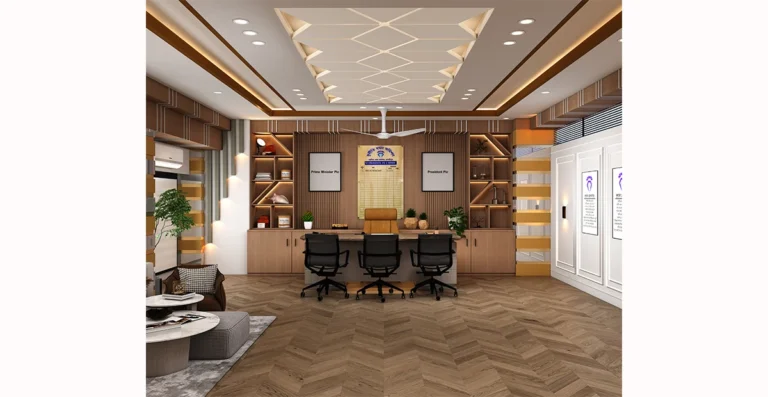
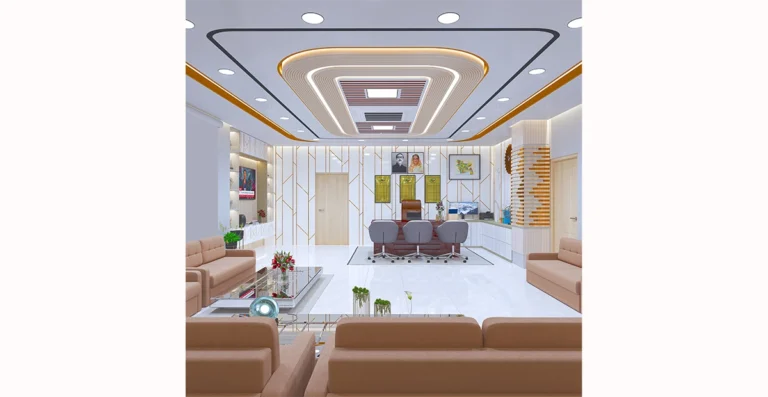
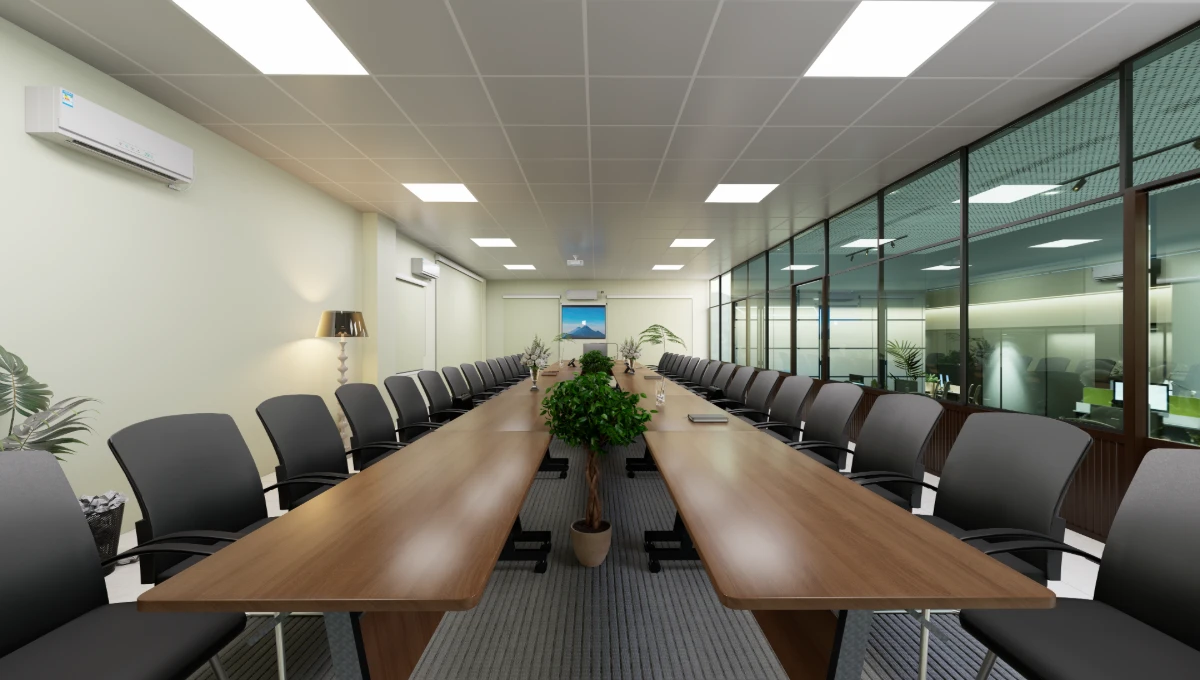
Typically, conference rooms contain a large table in the center of the room, comfortable chairs for prolonged meetings, a display screen or projector for visual aid, sufficient lighting for clarity, and acoustic wall panels to minimize echo.
Complete Description:
A well-designed conference room is an upscale, quiet and well-organized space containing a large meeting table, ergonomic chairs, a display screen/projector, organized wiring, good lighting and sound-controlled walls to allow for clear and uninterrupted communication among individuals and enable them to express ideas freely and reach important conclusions.
Bullet Description:
- Centered Large Table
- Ergonomic Chairs for Prolonged Seating
- Display Screen/Projector
- Ceiling/Wall Lighting
- Acoustic Panels for Reduced Echo
- Additional Meeting Equipment (Mic., Whiteboard, Remote Control)
- Branding Elements (Logo, Color Theme)

Interior Design For Conference Rooms
Let’s detail out how to do the full conference room interior design.
A conference room has to be functional, as well as aesthetically pleasing and comfortable. It also has to support extended periods of discussion and eye contact and provide a smooth flow for presentations. And at the same time it should be current in its appearance and show the company’s brand.
Here are the details to expand upon the conference room interior design:
Room Size & Shape
Measure the room before you start designing it.
- Smaller rooms accommodate 4-6 people.
- Medium-sized rooms can accommodate 8-12 people.
- Larger rooms can accommodate 14-25 people.
Also consider the shape of the room:
- Rectangle → long tables fit best.
- Square → round tables fit best.
- Narrow rooms → mount TVs and projectors on walls.
Table Design & Placement
The conference table is the focal point of the room.
- Types of tables:
- Rectangular tables
- Oval tables
- U-Shaped tables
- Round tables
- Boardroom executive tables
- Placement Rules:
- Leave 3 feet between the table and all the walls.
- Make sure the screen is visible from all seats.
- Avoid the table being pushed up against the walls.
Chair Selection
Most meetings run 30-90 minutes. Choose comfortable chairs that will allow employees to remain seated through the entire duration of the meeting.
What to look for in a chair:
- Soft cushion
- Good back support
- Comfortable height
- Wheels so the employee can move around the room.
Lighting Setup
Proper lighting creates focus.
Use:
- Ceiling lights
- Downlights
- Wall lights
- Table accent lights
Do Not Use:
- Harsh White Light
- Direct light on the screen
- Any lighting that may cause glare on the screen.
Screen + Technology Setup
Conference rooms are used by both in-office employees and remote employees for meetings.
Include:
- 55-85 Inch TV
- Projector (if required)
- HDMI/Wireless Casting
- Webcam
- Microphone System
- Speakers
- Smart Controller
Acoustic Treatment
Many offices fail to take into consideration this part of the conference room — and that leaves them with an echo issue.
Use:
- Acoustic Wall Panels
- Soft Carpet
- Curtains
- Fabric Ceiling Panels
This allows employees’ voices to be heard throughout the room.
Branding
Show off your company identity:
- Logo behind the chairperson seat
- Brand colors on walls
- Motivational quotes or phrases
- Wooden Panel Background
This adds a level of professionalism when clients meet with employees in the conference room.
Storage & Cable Management
To maintain a tidy room:
- Hidden Cable Box
- Concealed Power Outlets
- Built-In Cabinet
- Whiteboard Storage
Airflow & Comfort
A warm room causes employees to become fatigued quickly.
Check:
- AC Position
- Cross Ventilation
- Fresh Air Flow
Design Checklist
Comfortable Seating
- Proper Visibility
- Zero Clutter
- Clean Layout
- Proper Lighting
- Tech-Ready Setup
- Noise Control
- Brand Presence
- Cable-Free Table
- Easy Movement Around Table

Conference Rooms for Meetings
A conference room should provide a distraction-free and smooth experience for all meetings. Whether it is a client presentation or a team discussion, employees should have ample opportunities to see the screen from any seat while sitting comfortably. Proper lighting and minimal distractions help employees stay focused which in turn increases collaboration and reduces meeting times while increasing productivity.
A conference room is primarily for meetings and the primary goal of creating a conference room is to create a smooth meeting process.
Clean Sightline
All employees should clearly see:
- The Presentation
- One Another
- The Person Speaking
Meeting Tools to Add
- Digital Whiteboard
- Marker Board
- Laser Pointer
- Wi-Fi
- Charging Ports
- Video Conferencing System
Meeting Efficiency Tips
- No Visual Clutter
- Comfortable Temperature
- Soundproof Environment
- Proper Lighting on Employees Faces (for Online Calls)
- Proper Spacing Between Tables
Types of Conference Rooms
Every organization requires different types of conference rooms depending on their working style.
Full Explanation:
Some organizations require a formal boardroom for high-level meetings. Other organizations require a training room for large gatherings. Organizations with small teams require huddle rooms for quick discussions. Organizations requiring high levels of technology require smart video conferencing rooms. Each type provides a unique working style.
Types:
- Boardroom – For Directors/Clients
- Training Room – For Large Teams
- Video Conference Room – For Remote/Online Meetings
- Huddle Room – For 4-6 People Discussion
- Presentation Room – For Pitching Ideas
- Creative Room – For Brainstorming

Step-by-Step Guide to Creating a Meeting Room
Creating a meeting room is much simpler if you can follow a process. The first step is to determine how you plan to use your meeting room — for example, client meetings, training sessions or presentations. Next choose the appropriate type of table and seating arrangement for your meeting room size. Finally, develop a lighting scheme and add audio/visual and acoustic solutions to allow the meeting room to operate effectively as either an in-person meeting room and/or an online meeting space.
Step 1: Assess Your Room
Identify the room’s size, shape, location of windows and entrance door.
Step 2: Determine the Room Use
What will you be doing in this meeting room? Client meetings? Team discussions? Training?
Step 3: Choose the Right Table Size
Select a table based on its size and shape.
Step 4: Determine Seating Arrangement
Use comfortable, ergonomic chairs.
Step 5: Develop a Lighting Scheme
Use a mix of ceiling, wall, and task lighting.
Step 6: Plan the Location of Screens
Place screens in such a way that they are visible from all seating areas.
Step 7: Install Audio Visual Equipment
Install microphone(s), speaker(s), webcam, and controllers.
Step 8: Improve Acoustics
Install panels, install carpet, hang curtains.
Step 9: Brand the Space
Display your company logo and brand colors.
Step 10: Provide Storage
Provide cabinets, shelves, and organizational products.
Step 11: Perform a Final Layout Check
Verify that there is adequate mobility and a clean appearance throughout the meeting room.
Common Mistakes to Avoid
Companies often commit easy-to-fix errors that decrease the efficiency of their meeting room. An oversized table obstructs traffic flow and bright lighting contributes to eye fatigue in extended meetings. Poor soundproofing produces echo, which affects remote video conferencing. Avoiding these common mistakes will contribute to a professional looking meeting room and provide comfort for all parties involved.
- Table is too large
- Bright lighting
- Ignoring acoustics
- Bad wiring
- Seats are uncomfortable
- Logo is missing
- The screen is too small
- Storage is missing
- There are too many decorations
- Internet connection is poor
- Best Materials for Conference Room Interiors
Materials greatly affect the meeting room’s durability, sound quality, and aesthetics. Sound-absorbing wall panels minimize echo, and carpet tile absorbs noise and provides a premium aesthetic experience. Soft lighting combined with gypsum board create a calming atmosphere. Choosing the correct materials will ensure the meeting room is both functional and durable.
Walls:
- Acoustic panels
- Wood veneer
- Laminated board
- Soft fabric walls
- Floors:
- Carpet tile
- Vinyl tile
- Wooden flooring
- Ceiling:
- Sound-absorbing ceiling
- Gypsum board
- LED panel light
Table:
- Engineered wood
- Plywood with laminate
- Solid wood (Premium)

Cost of Conference Room Interior in Bangladesh
Conference room costs vary according to the meeting room size, the degree of technology, and the types of materials selected. In general, meeting rooms with fewer than six people require minimal furniture and basic lighting, while meeting rooms with more than twelve people require high-end AV systems and acoustic treatment. Many companies in Dhaka invest heavily in branding and technology to establish a strong image. With a well-planned budget, you will achieve the most for your money.
| People | Cost |
| Meeting Rooms with Less Than Six People | BDT 70,000 – 150,000 |
| Meeting Rooms with More Than Twelve People | BDT 160,000 – 350,000 |
| Meeting Rooms with Fifteen to Twenty Five People | BDT 400,000 – 900,000+ |
Cost Determinants
- Materials
- Technology
- Seating
- Branding
- Acoustic Level
- Maintenance Tips
A meeting room runs efficiently only when it is properly cared for. Cleaning the table on a regular basis helps prevent dust from getting into the screens, chairs and acoustic panels. Keeping software current ensures that video-conferencing tools function correctly. Organizing cables and checking the sound system on a weekly basis prepares the room for any meeting at any time. Proper care will extend the life of the meeting room and increase its effectiveness.
- Clean the table once per week
- Vacuum chair daily
- Organize cables
- Maintain AC Filter
- Check Projector Lamp
- Replace old lamps
- Clean Carpet
- Keep Software Up-to-Date
- Test Sound System
Summary (SGE-Friendly Summary)
A conference room is a designated area for presentations, discussions and decision-making. A well-designed conference room interior design incorporates intelligent layout, comfortable seating, clear lighting, acoustic control and modern technology. Investing in a well-designed conference room interior design makes the meeting process easier, improves communications between team members, and makes a positive impression on clients. Each element of the conference room needs to work together to provide a comfortable and productive space.
Conference Room Design and Its Benefits
The meeting space (conference room) has the potential to be so much more than simply a place to meet. It can be one of the most important tools you can provide for employees to collaborate, communicate and exhibit their level of professionalism as a representative of their business. As businesses grow across cities like Khulna, creating a functional, yet aesthetically pleasing meeting space can prove to be extremely valuable over time.
Advantages of Having an Efficiently Designed Meeting Space:
Enhanced Team Communication:
Having ample space, sufficient lighting and comfortable seating with the right acoustics, plus having access to all of the modern technology you need will allow employees to communicate more effectively with each other. The use of visual aids, projectors, smartboards etc., enhances the delivery of presentations and facilitates group brainstorming.
Enhanced Level of Professionalism:
The quality of work that goes into designing a meeting space creates a lasting impression on clients, investors, and visitors alike. Whether it’s through the type of furniture chosen, the layout of the space, or how the decor was selected, a meeting space that is professionally designed sends a message about the standard of work you do.
Increased Employee Productivity:
Employees who sit at ergonomic chairs and participate in meetings from adjustable-height tables, while receiving plenty of light, are less likely to feel fatigued from long meetings. With the right amount of organization and minimal distractions, employees are able to remain focused on the discussions and decisions being made.
Optimal Use of Space:
When designing a meeting space using intelligent design strategies, there are many ways to utilize every square foot of space available. Modular furniture, mounted screens, built-in storage units, etc., are ideal in cities like Khulna where commercial real estate is expensive and space is very limited.
Technology Integration:
Conference rooms today are equipped with various technologies that make remote meetings possible; such as video conferencing systems, Wi-Fi enabled devices, smart lighting solutions etc. Allowing your employees to conduct seamless remote meetings with clients or employees in other parts of the world.
Employee Comfort and Well-being:
By providing comfortable seating options, adequate ventilation, natural light and the right acoustics, you are creating a positive working environment that encourages employee participation and reduces the stress they experience when participating in meetings.
Design Tips for Creating an Effective Meeting Space:
Use neutral color schemes and minimal decor to keep the focus of the discussion at hand.
Good lighting is essential for creating a productive meeting space, whether it is natural or artificial.
Using modular furniture, allows for the ability to create different layouts based on the needs of each meeting.
Including the latest in audio-visual technology (e.g., presentation software, video calling equipment), will aid employees in delivering presentations and conducting video calls.
Adding plants or decorative art, helps to create a warm inviting atmosphere that is also modern and cutting-edge.
FAQ
What is a conference room?
A conference room is a specific meeting area in an office building where employees meet, present and plan important projects.
Is a meeting room and a conference room the same?
No. A meeting room is smaller and has less equipment. A conference room is larger and has more equipment.
What does “conference room style” mean?
Style refers to the layout, design theme, furniture, lighting and branding of the meeting room.
How would you describe a conference room?
Quiet, clean and modern, with a large table, comfortable chairs, a screen, good lighting and controls for the sound system.
How many people should a conference room hold?
Most rooms hold anywhere from 6 to 20 people based on the size of the office.