Md. Monir Hossain
Residential Interior
Mohora, Chandgaon, Chittagong
1 month 14 days
2540 sq.ft
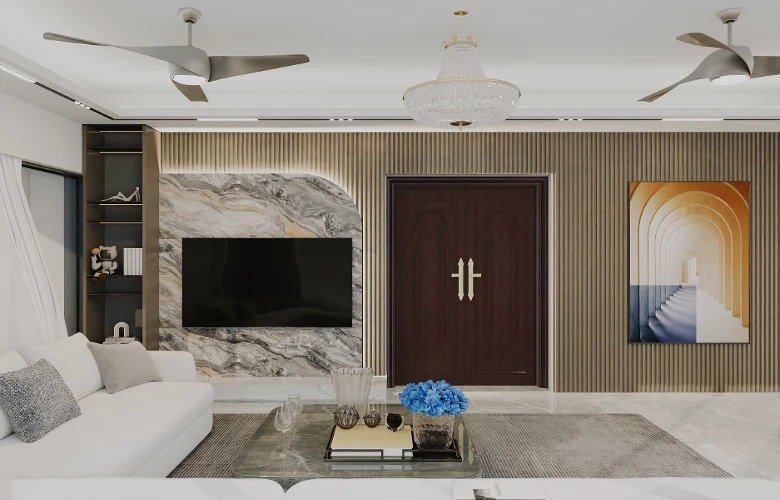
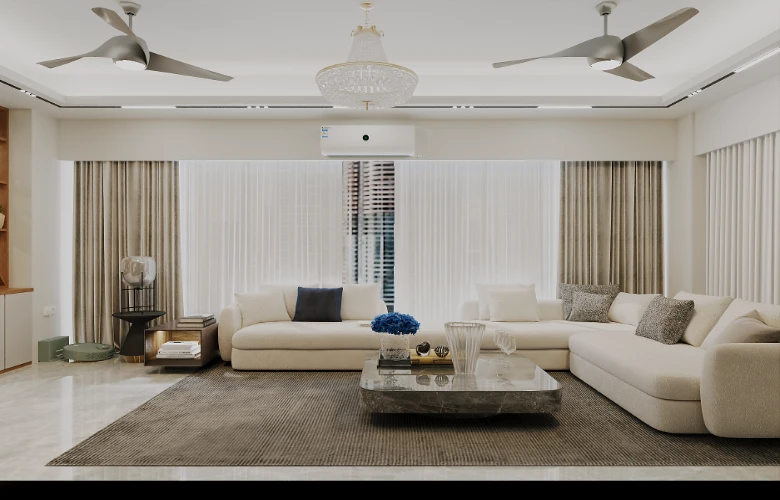
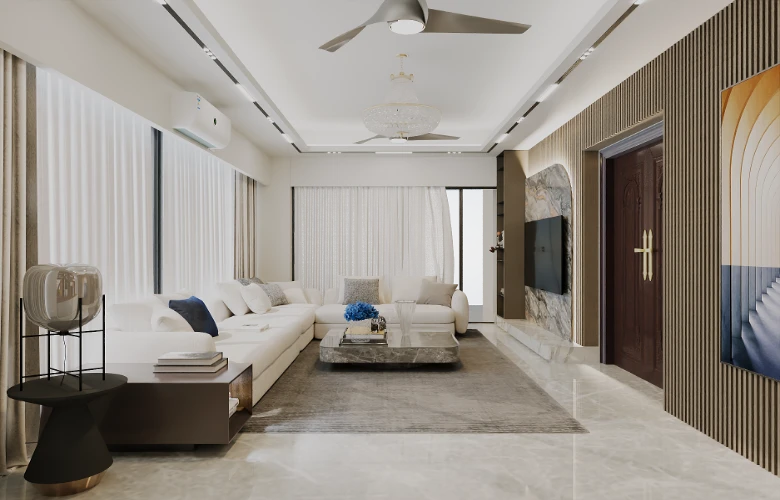
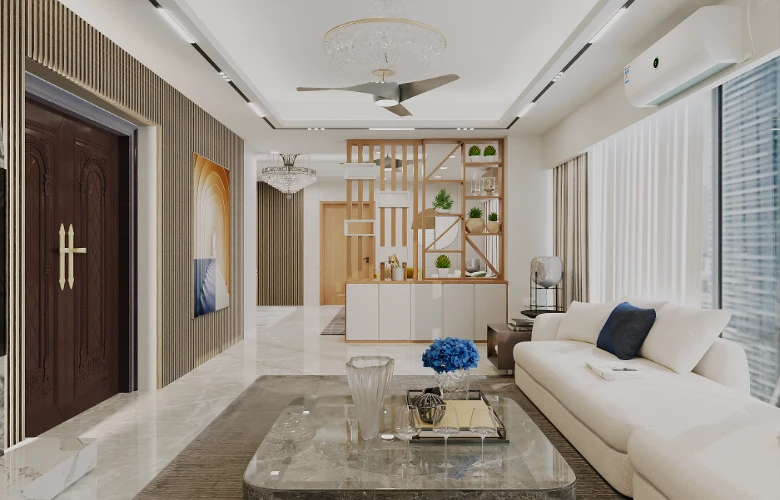
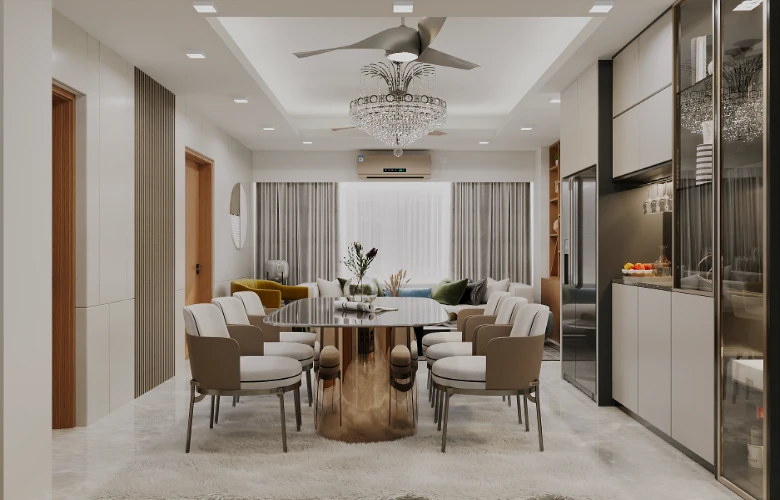
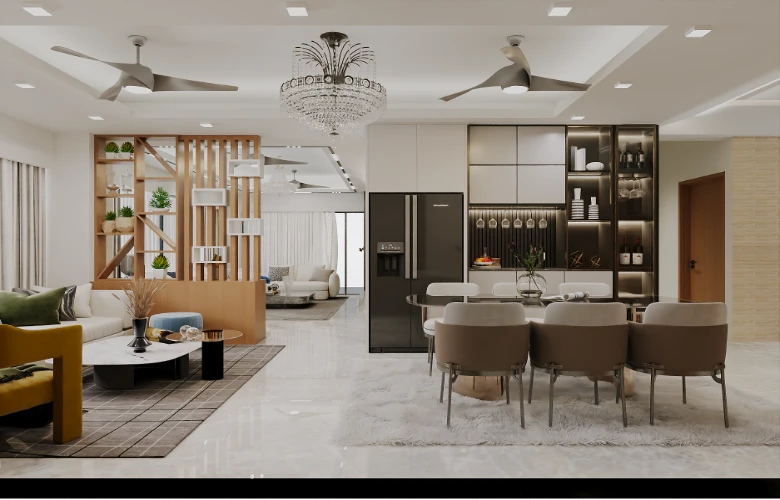
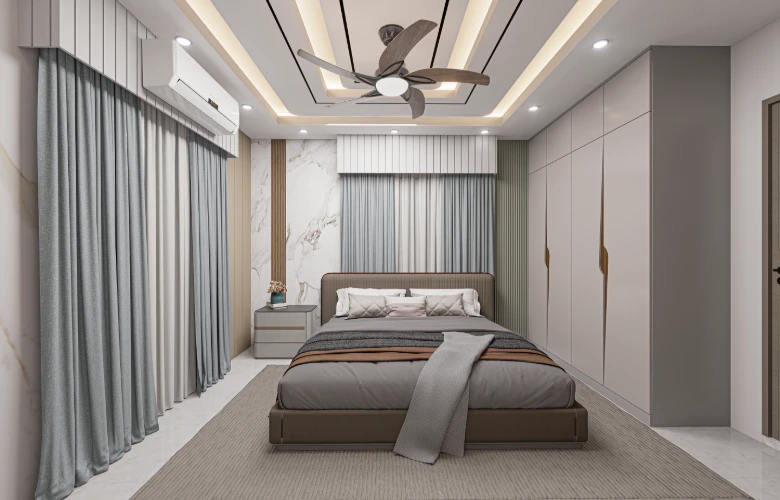
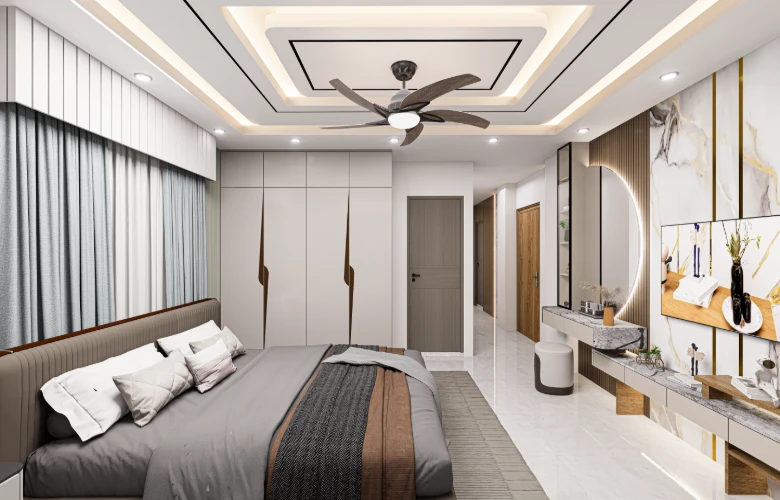
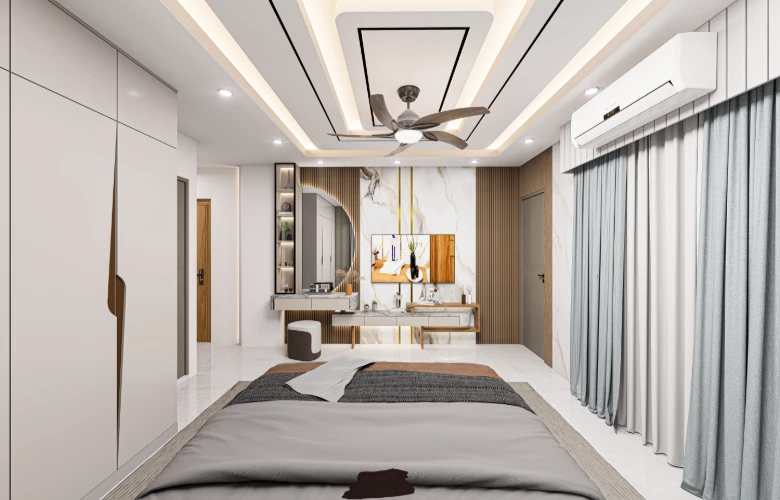
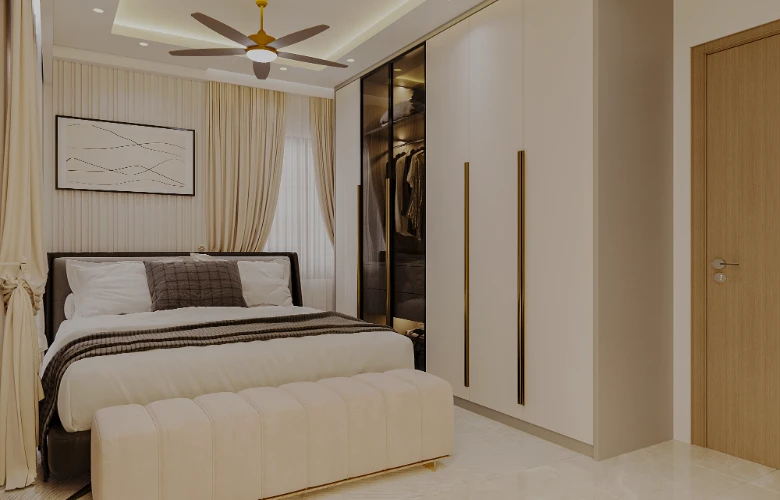
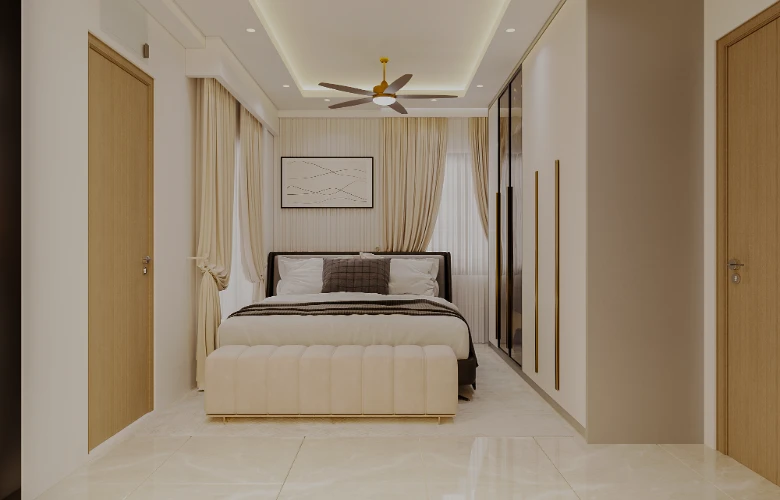
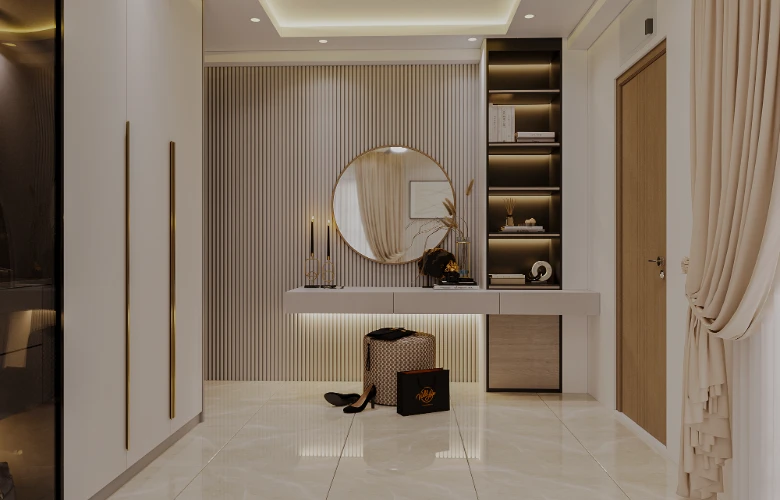
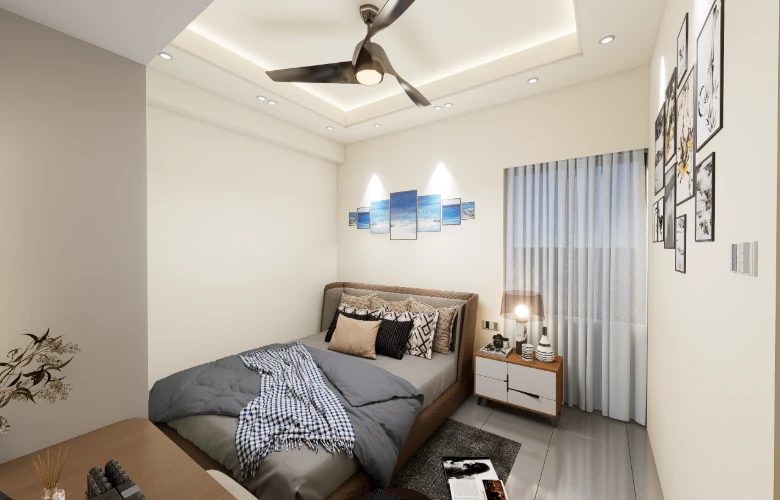
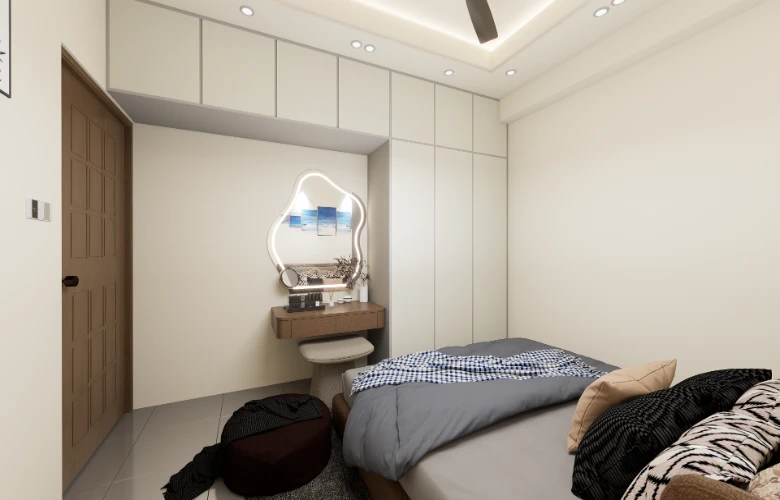
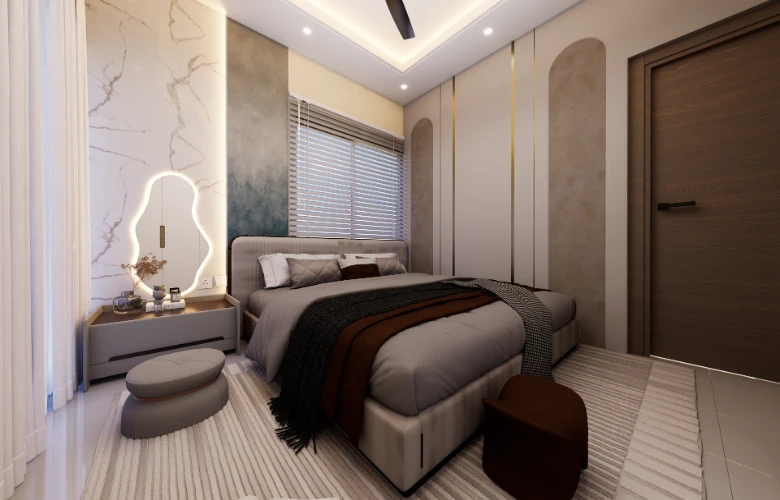
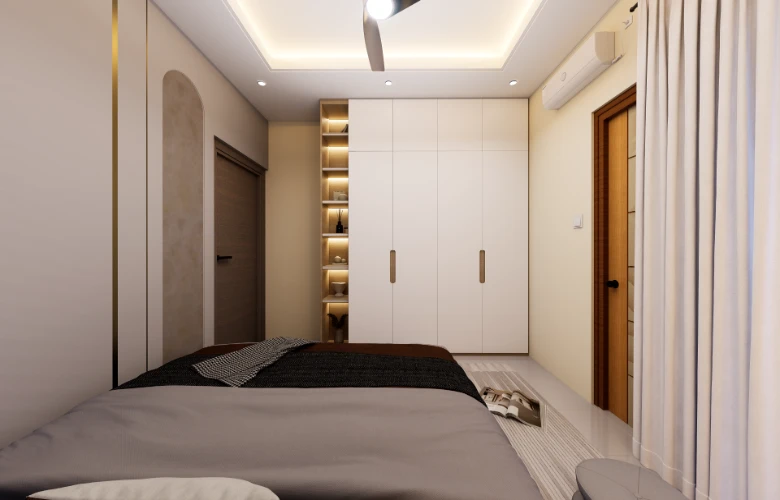
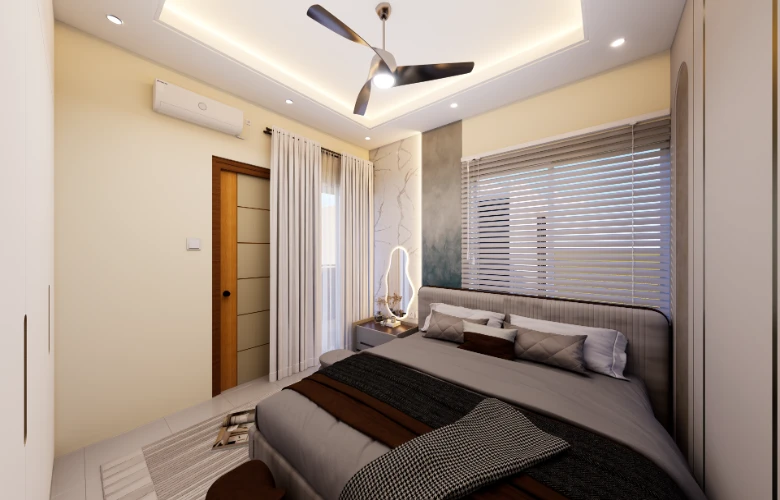
Md. Monir Hossain’s residential interior located at Mohara, Chandgaon, Chittagong, Bangladesh was designed over an area of 2,540 square feet and took approximately three months to complete. The focus of the project was designing a contemporary family house with open floor plan and also creating functional separation among all the rooms. The design was based on a desire of the clients who wanted to have a good balance of comfortable everyday life and social entertaining. The designer therefore created lounge, dining room and private spaces with well-defined functions and coherence. The distinguishing element of this project is the limited use of marble and lighting to produce a sophisticated yet accessible environment.
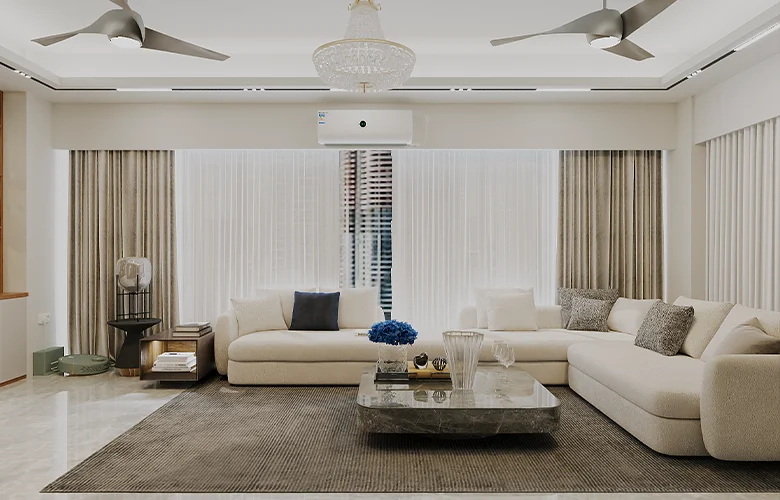
The beginning of the project involved a very large open-plan residence with many entrance points, many windows and service components which were predetermined. The advantages of the generous space included the potential for great views and daylight; however these same factors also represented risks of fragmented vision and loss of intimate relationships in the space. In addition to this, the client needed a home that would allow for extended family gathering without sacrificing their own desire for individual comfort in their everyday lives.
In order to achieve this goal the design strategy was to layer instead of divide. In place of solid partition walls, furniture groupings, rugs, and partially closed wood screens were employed to separate the space into various functional sections. This layering method provided the benefit of maintaining a continuous visual relationship while providing subtle cues to move about the space and distinguish function. To maximize the social aspects of the living and dining areas they were placed side-by-side in alignment to create a central core or hub. Conversely, the bedroom areas were treated as quieter and more insulating spaces from the rest of the house.
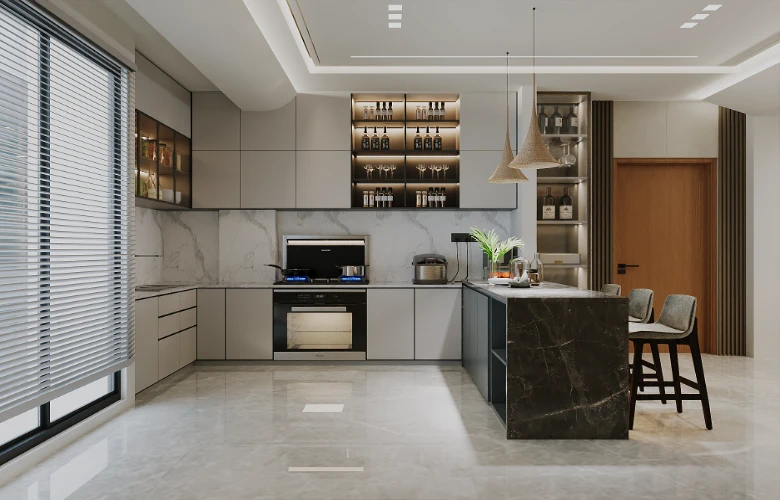
Since material selection was the primary vehicle for establishing an identity for the home, marble surfaces were incorporated as focal points or anchors. However, these marble surfaces were not installed in excess but were specifically used as background or accent walls, TV backdrop, tables etc. These were balanced by warm wood elements and soft textiles. Similarly, lighting was carefully selected to avoid harsh effects due to the high reflectance properties of some materials. Overall, the final product was able to shift easily between being a comfortable living environment during daily life and transforming into a lively entertaining space for guests in the evenings without having to undergo major transformations.
DESIGN DETAILS SPACE PLANNING
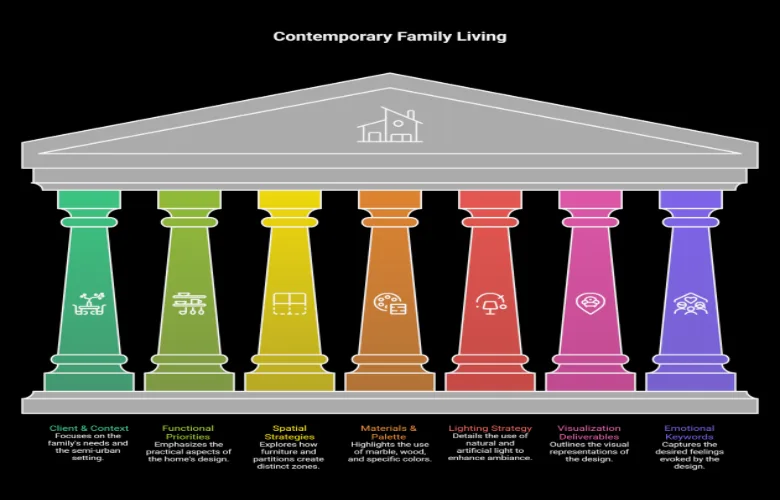
The overall design solution emphasized continuity throughout the principal living spaces while maintaining distinct identities for each specific zone. All seating arrangements are angled toward encouraging conversation while facilitating free movement around them. Bedrooms were placed in locations where there can be maximum separation from public/social areas while transitional areas serve as buffer zones.
Materials & Finishes:
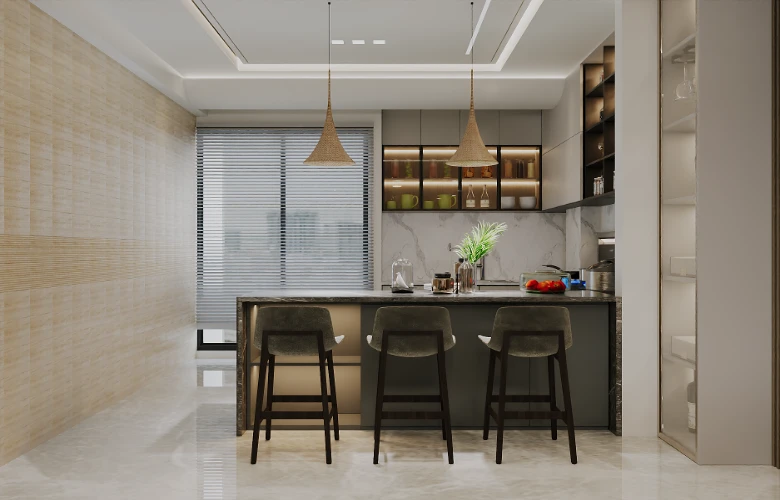
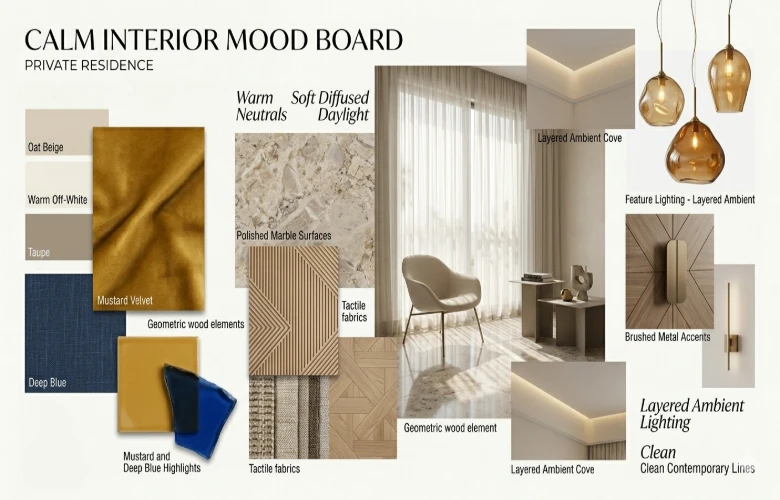
Marble is utilized as a defining material in floors, wall treatments and other vertical features thereby providing a lasting impression of quality and sophistication. Softening the impact of such “high-gloss” finishes are wood elements used in partitions and cabinets. Glass/metal accents introduce lightness and contrast to visual field.
Lighting & Atmosphere:
Maximizing natural daylight is achieved via numerous large opening points filtered by sheer drapery to minimize glare. Layered artificial lighting includes ambient cove lighting as base layer, while pendant/large chandelier(s) provide focal emphasis. Overall tone will be warm-neutral so that space appears welcoming rather than formal.
Color & Texture:
Soft white/beige/gray color palette creates canvas upon which marble veining remains visible while bright mustard yellow/deep blue accents provided through upholstery/decor adds vibrancy while controlling quantity. Contrast between glossy stone/textile/fabric surfaces creates tactile/visual experience.
Furniture & Joinery:
All custom furniture pieces are proportionally sized to fit scale and proportions of space so as not to clutter or overwhelm space. Built-in shelving provides task lighting to draw attention to decor while maximizing storage efficiency. Clean/rectangular joinery detail maintains contemporary aesthetic.
VISUALIZATION AND EXPERIENCE:
Still images rendered at high resolution illustrating important spaces with varying lighting conditions were produced to support this project. Such visualization allowed the client to review material combination selections, intensity levels of lighting, and how people would move through space prior to construction. Ultimately, quicker decision making processes resulted in less on-site revisions and less client uncertainty.
Find quick answers about our interior design, architecture, construction, and 3D visualization services in Dhaka.
Talk directly with our team we respond within 1 hour during office hours.
A flat in Chittagong may need additional consideration for humidity and, in some areas, salt-laden air. Interior planning should therefore consider moisture exposure, ventilation, furniture placement, and material durability from the beginning rather than treating environmental conditions as an afterthought.
Good joinery depends on more than choosing a board or surface finish. Edge protection, hardware quality, ventilation around enclosed cabinets, proper fixing, and appropriate detailing at joints can all affect how furniture performs over time, particularly in humid environments.
Furniture, electrical points, switches, sockets, lighting fixtures, and appliances should be coordinated before fabrication and installation. This helps avoid situations where a wardrobe, TV unit, kitchen cabinet, or other built-in element blocks an outlet or makes a planned electrical point difficult to use
A site assessment should examine actual dimensions, wall and floor conditions, existing electrical and plumbing points, windows, ventilation, structural limitations, and access for furniture and materials. These observations help ensure that the final design is based on the real site rather than only the architectural floor plan.
Maintenance can be considered through accessible service points, durable finishes, replaceable components, practical hardware, and furniture details that allow cleaning and repair without dismantling large portions of the interior. This approach can reduce long-term maintenance difficulties.
Material specifications should clearly identify the proposed board or substrate, surface finish, hardware, color or texture, and where each material will be used. Clear specifications reduce confusion during procurement and help keep the finished interior consistent with the approved design.
Renovation planning should first identify which existing elements can be retained, modified, or replaced. New furniture, ceilings, lighting, finishes, electrical work, and storage should then be coordinated with the existing conditions to avoid unnecessary demolition and improve the overall result.
A modern interior works best when visual elements are supported by practical decisions. Durable finishes, accessible storage, comfortable furniture dimensions, useful circulation paths, easy-to-maintain surfaces, and properly planned services can allow the design to remain attractive while supporting everyday living.
Kazi Family
Since 2010, a Dhaka-based interior and architectural firm with 873+ completed projects across Bangladesh. We specialize in residential, commercial, and hospitality spaces, delivering end-to-end design and execution solutions.