Client:
Rony Bhuiyan
Project Type:
Exterior /Architectural
Location:
Debiddar, Cumilla.
Status:
Under Construction
Area:
1,498 sq.ft
Project Overview:
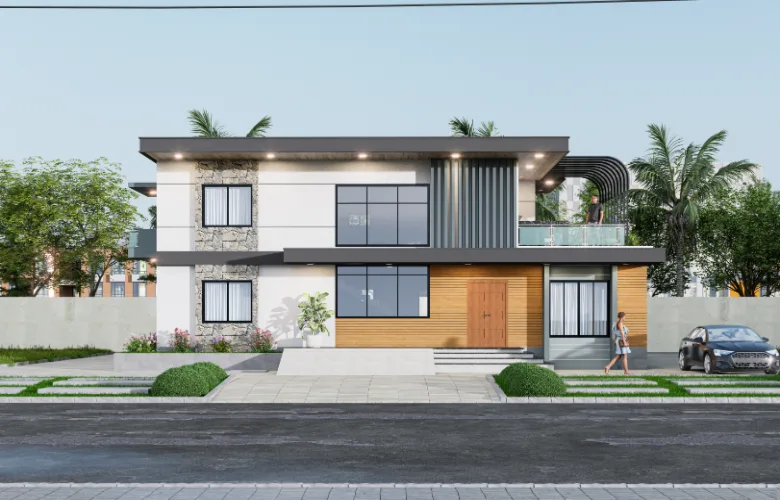
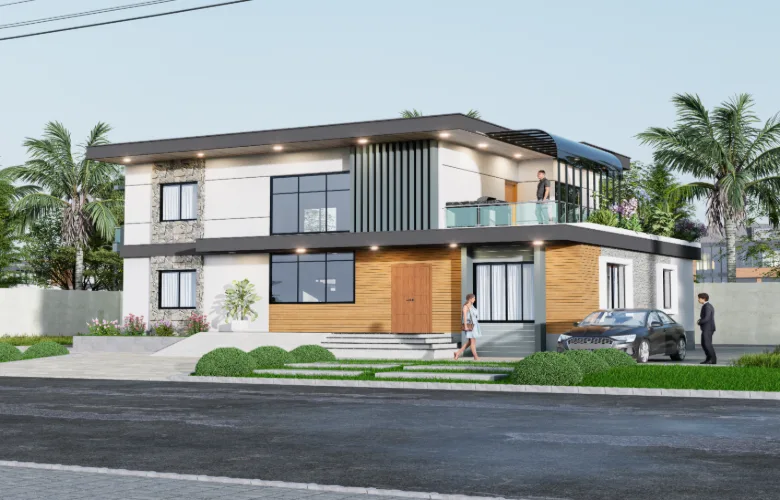
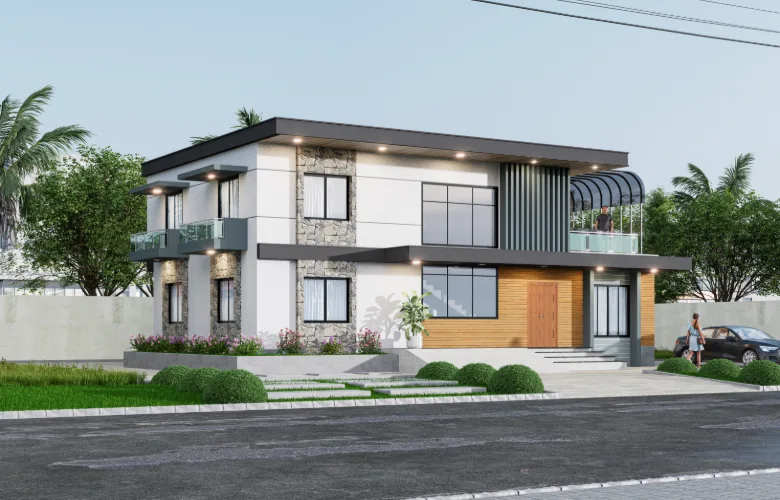
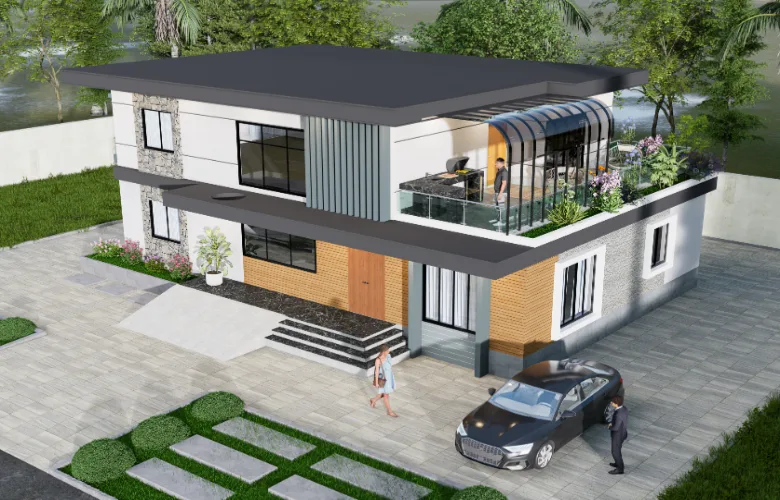
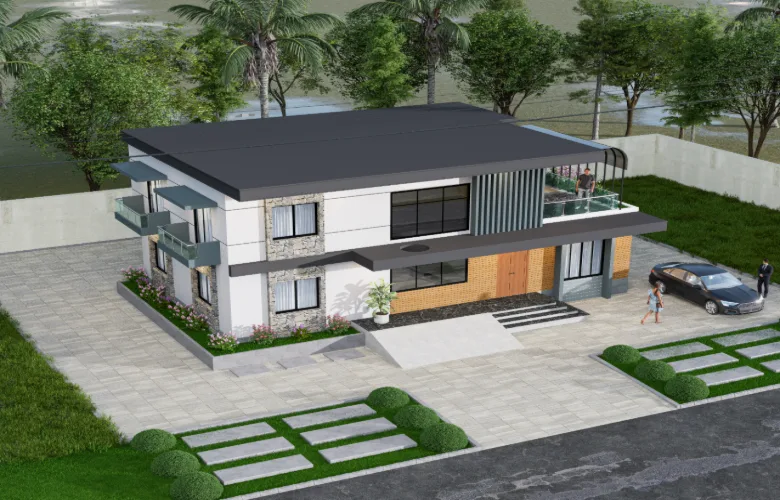
The design is for a 1,498 square foot contemporary single-family residence. It is currently being built for Rony Bhuiyan in Debiddar, Cumilla. As it relates to modern tropical design principals; this house will be a compact, multi-level family home. The main goal for this building’s exterior is to have an aesthetically pleasing facade with balance as it relates to both the open space/privacy and how environmentally responsive it can be. What sets this apart from others are the layers of material used on its exterior, and the way the opaque massing is juxtaposed against the translucent masses.
Project Story:
One major constraint when beginning the project was the small size of the building lot. However, the size of the lot did not limit the need for all the functions required for a complete multi-level family program. Instead of limiting the function or reducing the scale of the house, we chose to simplify and refine the façade language. By developing a continued conversation between volume and void; solid volumes made of stone were established to be grounded. Transparent surface areas made possible through the use of glass openings and balcony cuts were created to allow for visual interest and depth. The contrasting solid and void relationship developed into a main design driver for the development of the elevations’ relationship to light, view and privacy.
Another important decision made early in the design process was to consider balconies not just as extensions, but also as a means of creating climatic buffer zones. Using recessed forms, shading devices and layered façades reduced solar radiation gains while providing open views to the external environment.
Ultimately, we have been able to achieve a well-balanced yet expressive residential space that provides the necessary structure, climate awareness and quiet modernity without utilizing excessive ornamentation.
Project Insights:
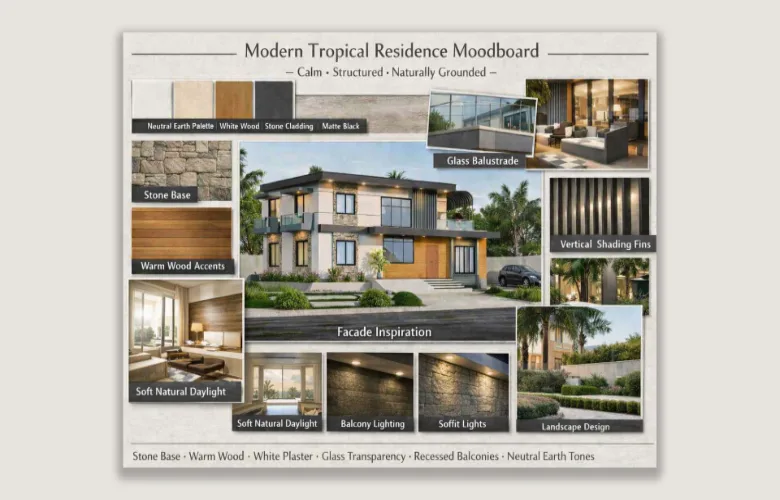
- Compact massing achieved through articulated layered façade treatments rather than expanding upward.
- Solid stone base used to create visual stabilization of the building and increase durability at grade.
- Passive shading zone functionality provided by recessed balconies for thermal regulation.
Vertical fins added to modulate sun exposure and contribute to rhythmic development of façades. - Uninterrupted visual flow across levels maintained through glass railings.
- Heavy base material separation from lighter upper volume material through zoning.
- Softening of built edge transitions to streetscape created through landscaping.
Strategic placement of large openings to promote natural cross-ventilation and daylight access. - Use of white plaster to reflect solar radiation and promote visual clarity.
- Calibration of balcony depths to optimize openness versus privacy requirements.
Design Details:
Space Planning:
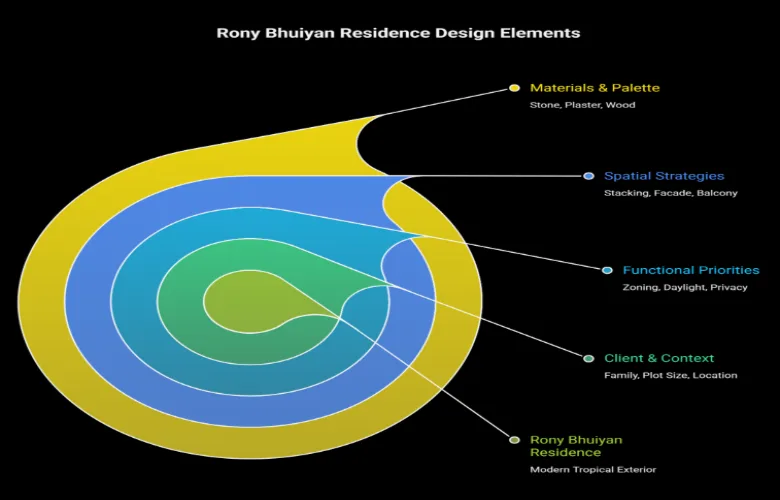
The residence will follow a vertical zoning logic in terms of stacking social/semi-private/private functions across levels. This methodology enables an efficient operation of a compact 1,498 sq.ft floor area without visual clutter. Outdoor facing spaces have priority assigned on upper levels to maximize livability potential within a high density footprint.
Materials & Finishes:
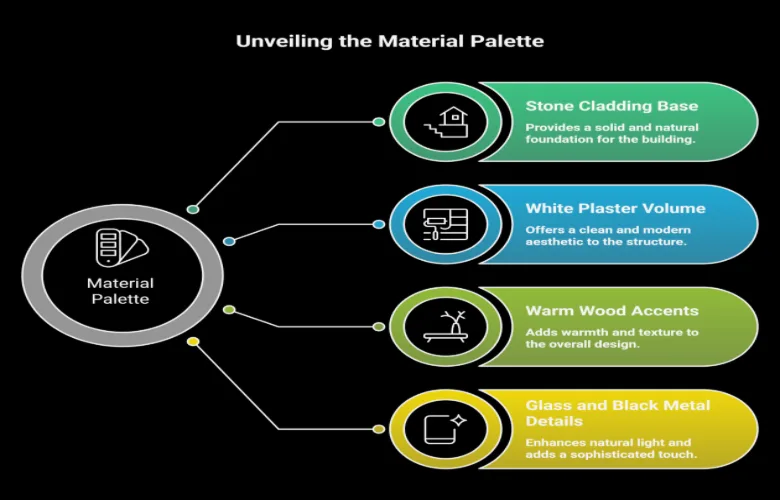
The material palette includes stone cladding, white plaster, warm wood paneling and glass with metal detailing. Stone provides visual anchoring for the structure, while plaster promotes brightness and continuity. Warm wood introduces tactile warmth and helps soften transitional relationships between architectural elements.
Lighting & Atmosphere:
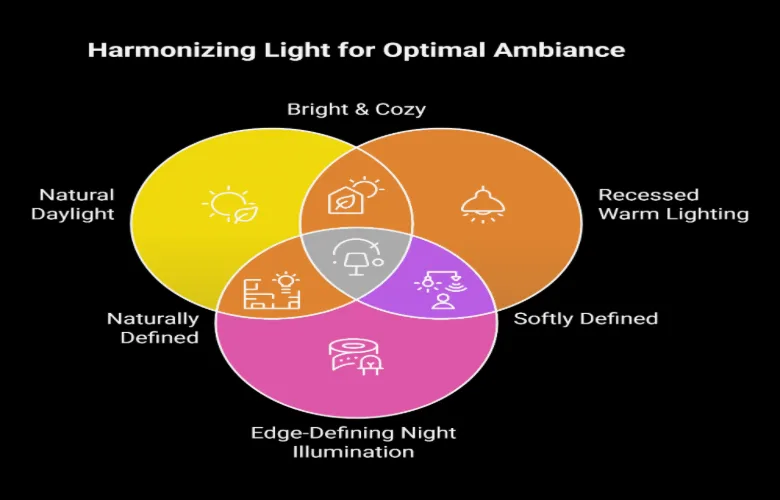
During daytime hours, natural daylight develops the architectural expression through recessed balconies and large openings. As nighttime arrives, warm recessed lighting below slab edges and canopies highlight structural lines. Lighting Strategy emphasizes silhouettes and depth over decorative light displays.
Color & Texture:
Stable color usage through white, beige, gray stone, warm wood and black framing contributes to a sense of visual equilibrium. Texture variation provides a principal design tool – rough stone juxtaposed against smooth plaster and matte wood surfaces produce slight depth throughout façades.
Furniture & Joinery (Exterior Language):
Seating elements located on exterior surfaces (balconies), edges of balconies and rail system details are considered integral parts of the architectural elements as opposed to additions. Minimal glass and metal detailing are applied to preserve visual clarity – therefore allowing the building form to continue being the predominant visual element.
Visualization & Experience:
The project has been explored using exterior 3D visualization studies including daylight renderings and material-based façade explorations. Through these visualizations, we were able to further define proportions, balcony depth and transitions between materials prior to commencing construction. Visualizing our designs allowed us to ensure that client expectations aligned with actual spatial and atmospheric experiences resulting from real-world conditions.
Why was the Layered Façade chosen instead of a single Mass?
A:A Layered Façade was selected as it provided a means to create visual depth from a very tight site (compact footprint) by providing an alternative to expanding physically and provide a visual interest by varying materials and/or volume.
How does this Design Respond to Climate Conditions?
A: Climate responsive design strategies were employed to minimize the impact of solar radiation upon occupants’ thermal comfort and improve daylight penetration. The recessed balcony areas, shading fins and variable opening sizes help to control radiant heat gain during summer months while still allowing for cross ventilation and natural light access.
What role Does Stone Play in the Composition of This Building?
A: Stone provides grounding for the building at its base and increases durability where there is potential for higher wear/tear (exterior contact zones).
Are Large Glass Openings Practical for Privacy?
A: Yes; due to strategic placement/balancing of recessed areas and vertical screening elements around the large glass openings.
How Does This Design Avoid Looking Too Heavy Given Its Small Site Area?
A: This is accomplished by separating the mass of the building into multiple layers of different heights/depths and using lighter weight materials above the heavier/grounded base.
What Value Did 3-D Visualization Add to This Project?
A: Precise testing of the relationships between each element that make up the facade including proportions, overhang depths, lighting effects etc… prior to the start of actual construction occurred.
Can the Facade Language Be Translated To Other Residential Sizes?
A: Yes; The same principles of layering apply to all residential sizes.