Duplex Residence Design at Pabna
Client:
Hossain Md Sarowar
Project Type:
Residential Architecture
Location:
Chandmari Road, Chalkpailanpur, Pabna.
Duration:
7.5 Months (Approx.)
Area:
3,260 sq.ft
Project Overview:
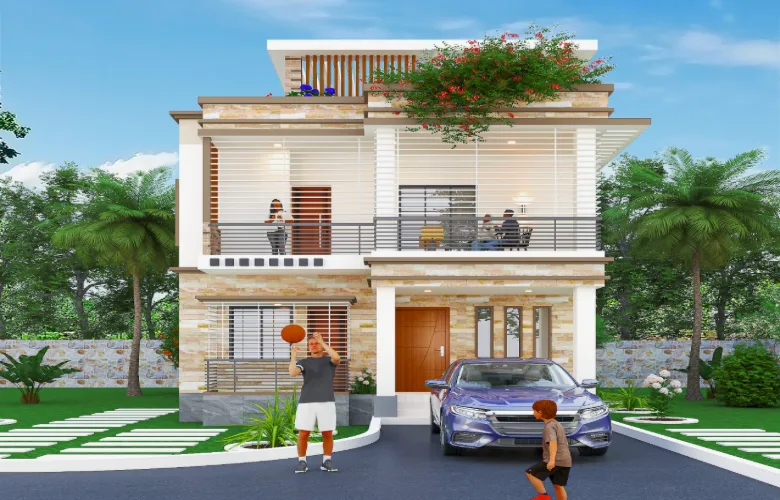
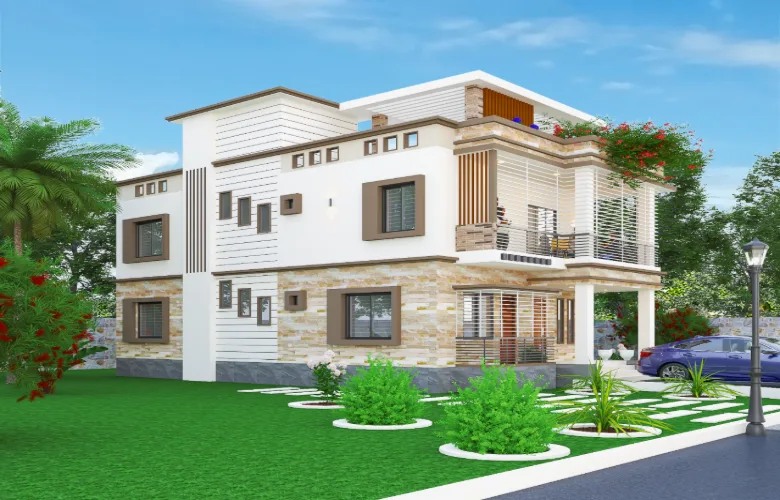
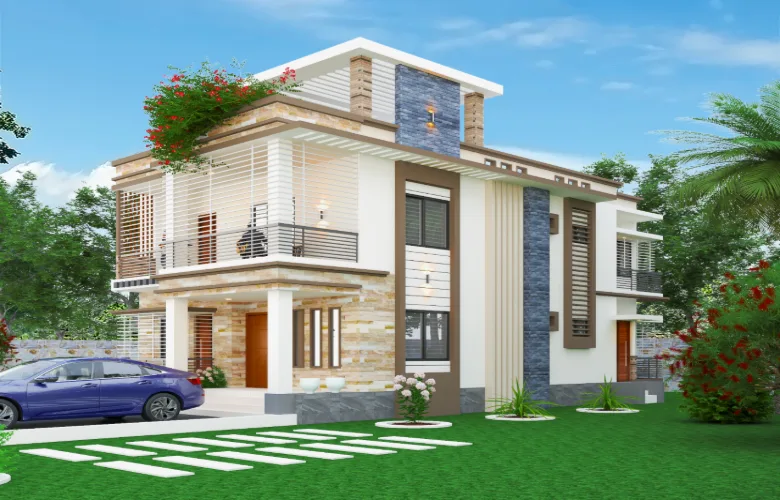
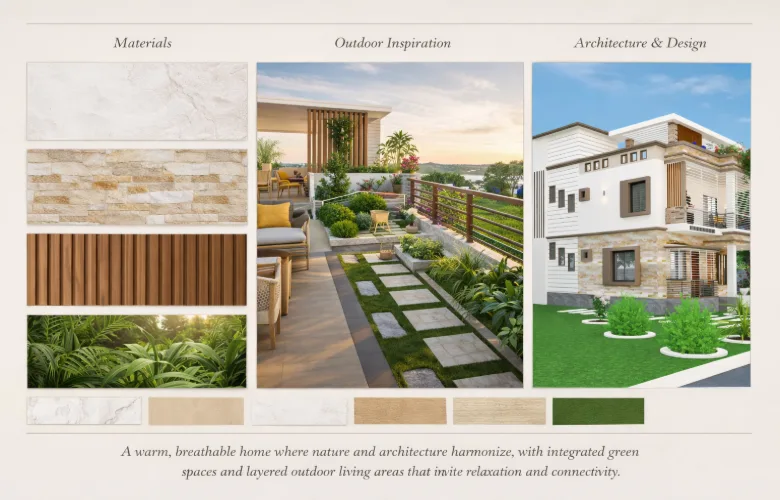
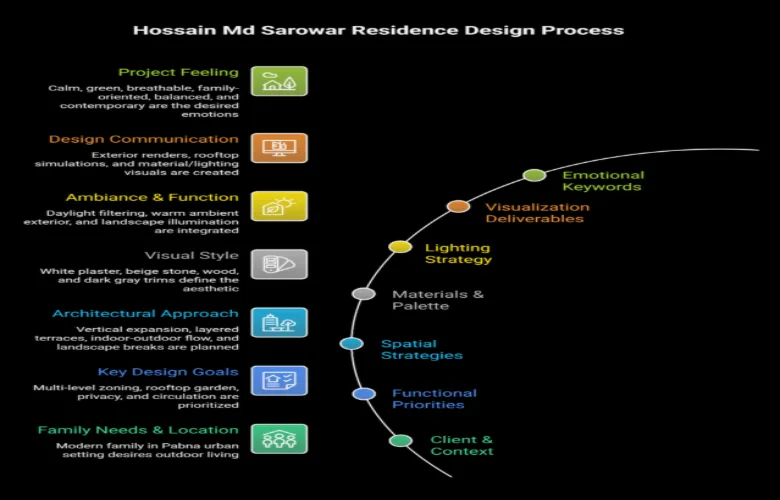
This is a 3,260 sq.ft residential interior led architectural house for Client Hossain Md Sarowar in Chandmari Road, Chalkpailanpur, Pabna. The focus of the design is on an urban family’s residential space, which increases the quality of their lives vertically through the use of balconies and rooftop gardens. The primary objective of the project is to incorporate nature into every day family activities while maintaining both privacy and functionality. A continuous flow exists between the internal spaces, the landscaped external spaces and the layered facade elements in order to create a unique identity for the building.
Project Story:
The starting point for this project was a well-known residential constraint: small parcel of land and numerous lifestyle uses. The client needed a home that would enable it to provide the necessary support for the day-to-day needs of his family and also accommodate social events and other types of leisure activity outside of the home.
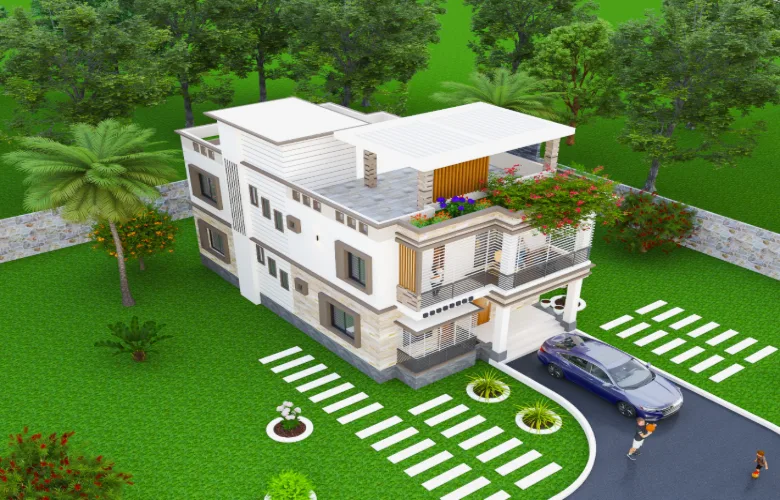
As opposed to increasing the horizontal footprint of the property, the design has utilized vertical growth and increased the amount of exterior living area through terracing, balconies and roof top usage. As such, this type of spatial constraint became an opportunity for layered living; whereby each floor of the residence can have a different relationship to light and the landscape.
An important design choice was to consider plants as an integral component of the operation of the home as opposed to just decorative elements. Through the use of planting zones, lawn pockets and roof top gardens, the design created opportunities for shaping movement patterns, providing privacy and influencing visual comfort throughout the entire dwelling.
Ultimately, what emerged was a family oriented home that felt open yet contained – structured enough for everyday life, but relaxed enough to support outdoor relaxation and recreation.
Project Insights:
- Strategy for maximizing available usable space within a restricted site area using vertical extension.
- Roof top garden added as another possible living space for family activities.
- Slotted balcony facades were designed to achieve an optimal balance between privacy, air exchange and solar radiation protection.
- Landscaping incorporated at grade to reduce impact of built form and enhance local climate.
- Separation between private bedroom areas and semi public outdoor zones clearly defined.
- Ventilation improved through cross opening orientation across all facade orientations.
- Visual continuity maintained among various floors due to restraint in selection of materials used.
- Use of stone base established solidity to structure and minimized visual contrast caused by excessive lightness.
- Sequence of outdoor circulation pathways connecting driveway, garden and entrance established seamlessly.
Design Details:
Space Planning:
Spatial organization followed a vertical zoning concept based upon family. Bedrooms were organized along upper floors, with balconies and terraces extending semi-private living spaces outwards. Spaces along ground floor connected directly to landscaped zones resulting in a seamless transition between indoors/outdoors.
Materials & Finishes:
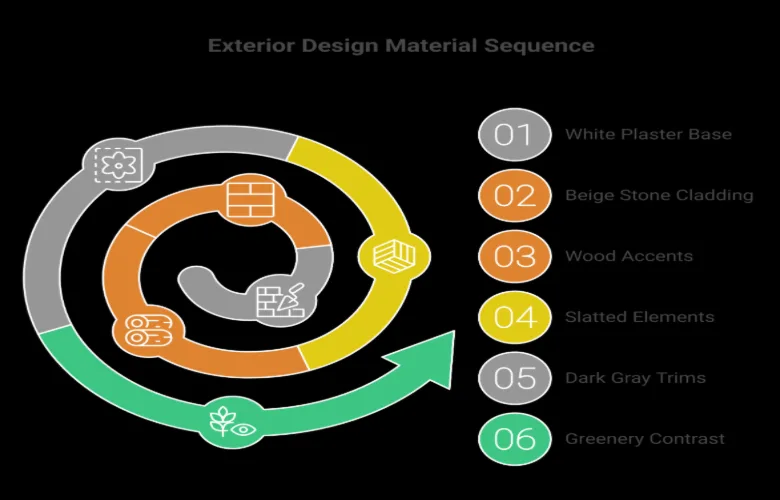
White plaster, beige stone cladding, wood accents and dark grey trim establish exterior expression. Stone establishes a sense of solidness/durability and plaster simplifies/clarifies. Use of wood and darker tones introduces a sense of warmth/contrast to prevent visual tedium.
Lighting & Atmosphere:
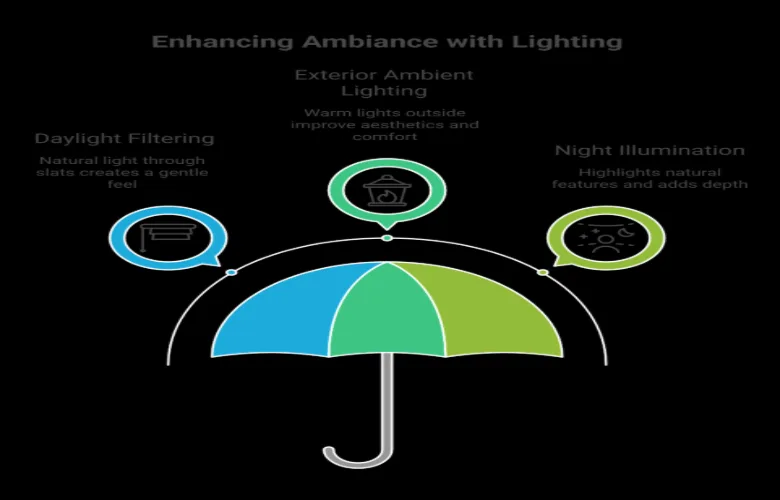
Daylight played a major role in establishing an ambience within the home. Slated balcony screens filter daylight while reducing glare and heat. Warm ambient lighting during nighttime hours emphasizes architectural edges and landscape features. Overall ambiance is quiet/residential with gradual transition between indoor/outdoor lighting conditions.
Color & Texture:
Neutral color scheme (white, beige, gray, natural wood) supported by prominent use of green as accent color through landscaping. Contrast between textures (smooth plaster, rough stone, soft vegetation) adds depth without creating visual over load.
Furniture & Joinery (Exterior Interface):
Built-in seating zones in terraces/garden edges serve as functional extensions of architecture. Railings/screens for balconies are designed as integral components as opposed to being afterthoughts. Therefore visual cohesion is achieved across all elevation planes.
Visualization & Experience:
The project was developed through 3D visualizations of exterior/spatial environments including daylight simulation studies/material samples/roof top experiences simulations. These visualizations assisted the client in understanding how vertical circulation will function/privacy levels will be maintained/large scale landscaping will operate prior to making construction decisions. Visualizations greatly aided in clarifying ambiguity associated with developing compact planning schemes that include opportunities for outdoor livability.
In terms of planning for a complete family house, how will the designer address limitations in a plot’s area?
A:The designer will expand upward to utilize the roof and the spaces at each level of the house (terraces) to add functional areas to live.
What function(s) do plants serve in the design of this project?
A: Plants are being used as part of a functional system in support of both functionality/privacy/cooling/lifestyle – they’re not just for decoration.
With so many balcony windows and openings, what method will be employed to maintain privacy?
A: To establish layer upon layer of visual separation between interior/exterior spaces, plant material, and slat screening will be utilized to create these layers — not to block sunlight or air movement.
Will the rooftop only be decorative; or, can it be actively used by the family?
A: The rooftop has been designed as a gathering space, for relaxation, and for garden activities by the family.
How does natural daylight perform within the home?
A: Natural daylight entering into the home is filtered through architectural slats providing a controlled daylight condition that minimizes glare.
What would you say was the largest challenge faced during your design process?
A: Designing in a compact site, balancing openness with privacy and visual clarity.
How did three-dimensional visualization enhance the overall design process?
A: Three-dimensional visualization allowed designers to effectively simulate a vertical living experience — and make informed decisions regarding where to place landscaping/plantings and the rhythm of their facades prior to commencing construction.