Industrial Factory Exterior Design at Kaliakair
Client:
Roodbac
Project Type:
Industrial Architectural Exterior
Location:
Kaliakair,Gazipur
Status:
Under Construction
Area:
31,659 sq.ft
PROJECT OVERVIEW:
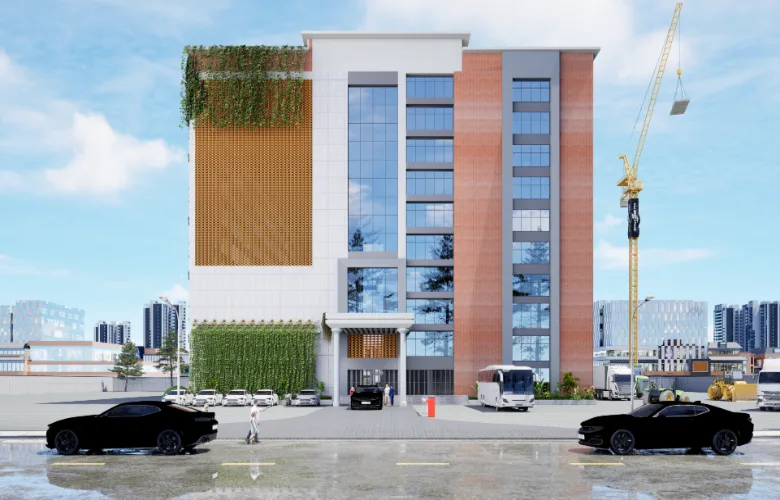
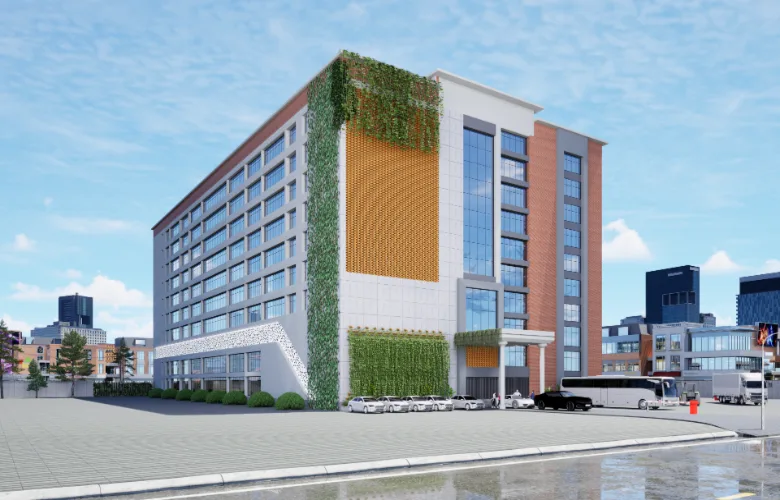
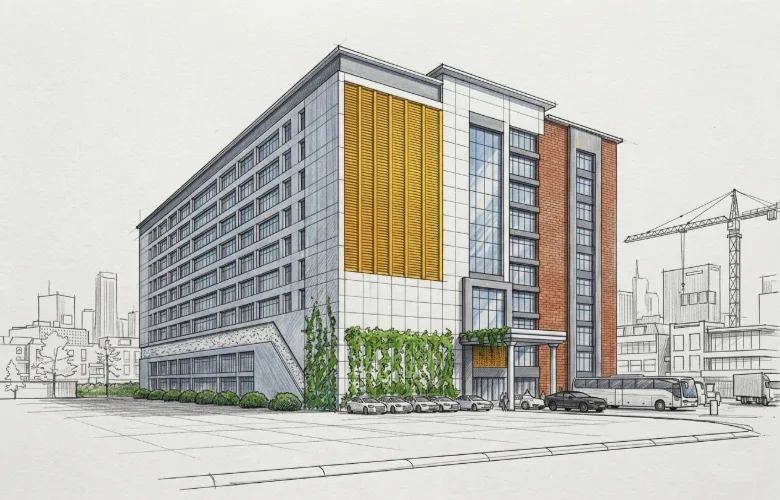
Roodbac’s 31,659 sqft. Industrial Production Facility, located in Kaliakair has been envisioned by us to be an environmentally responsible production space, where a focus on both Operational Efficiency & Corporate Image will coexist. As an Exterior Architectural Project we have designed the Building to serve as a single entity for Manufacturing, Storage & Administrative operations. Our primary objective was to take the typical “Factory” aesthetic, which dominates the majority of existing factory buildings & to make it more responsive to its Environmentally Responsible Nature through the Façade Design of the Building. Ultimately our intention is to show how the use of Greenery & Layered Materials can redefine the Scale of what is typically viewed as a large Industrial Mass.
PROJECT STORY:
The beginning of this project involved a paradigm shift. Instead of viewing the building solely as a functional factory, the objective was to define the building as an outward expression of the client’s operational identity.
The greatest limitation was size. With an approximate total floor area of 31,659 square feet, located in a small urban site, the potential existed for the building to appear as a monolithic mass. However, instead of simply reducing the height or width of the building, the design broke down the volume into several easily readable segments utilizing vertical plantings, screen type lattice, and gradual changes in materials.
Environmental performance was incorporated into the facade system. In addition to providing shade for the interior spaces and managing daylight penetration to minimize heating loads; the vertically planted green walls and perforations were designed to control solar radiation and provide natural ventilation.
The ultimate outcome is a factory that operates effectively and presents itself as a well-composed, modern representation — clean, logical, and intended.
PROJECT INSIGHTS:
- The front elevation of the building was designed as an entry point for corporate clients as well as a separation of public perception and private industrial operations.
- Green walls on the north elevation assist in cooling the building and aesthetically soften the overall mass of the building.
- The second layer of skin (the metal lattice) provides additional shading and air circulation to all sides of the building.
- An office block is placed at the entrance of the building for daylight penetration purposes and so employees can interact with clients directly.
- Production facilities remain open spanned to allow flexibility in future configurations.
- Vehicle traffic route is clearly established to avoid pedestrians crossing paths with moving vehicles.
- Composite terracotta panel color provides warmness to an otherwise neutral industrial palate.
- Strategic limiting of glass curtain wall helps to maintain low thermal load.
- Entrance canopy creates hierarchy and improves visitor way-finding capabilities.
- Landscaping utilized as transition zone between hard surfaces and building perimeter.
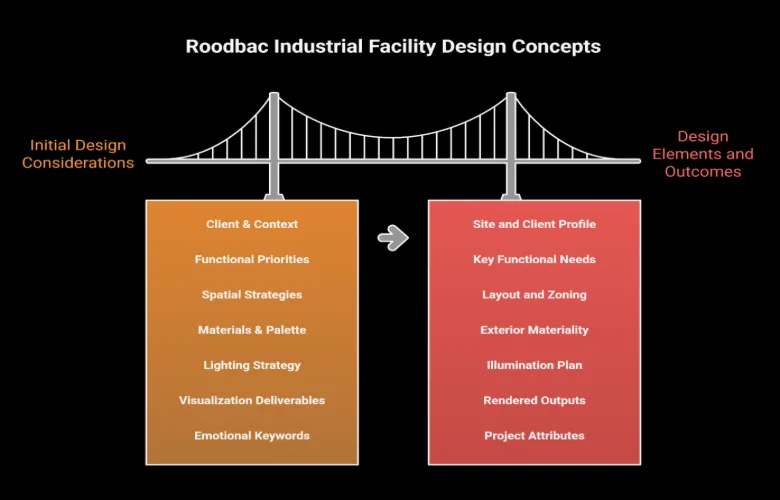
DESIGN DETAILS:
SPACE PLANNING:
Building layout was created in a front-to-back sequence. Office/ Administration spaces have been designated for the front elevational exposure. While production and warehouse spaces are located behind. All circulation routes have been isolated to prevent conflicts between trucks and people walking around.
MATERIALS & FINISHES:
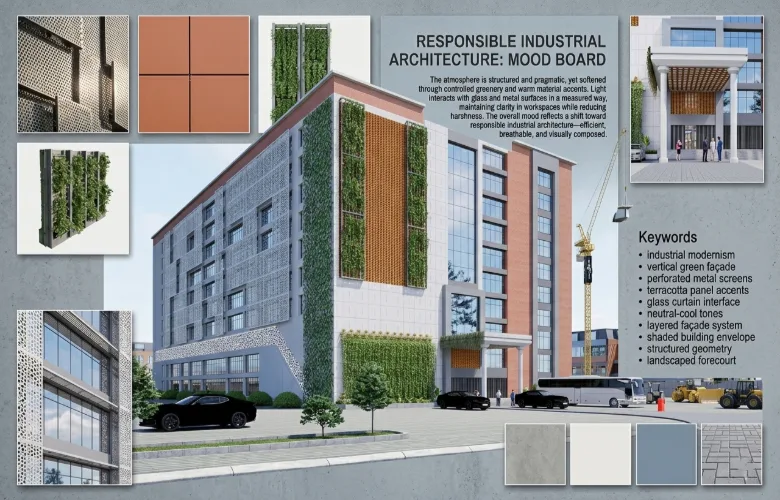
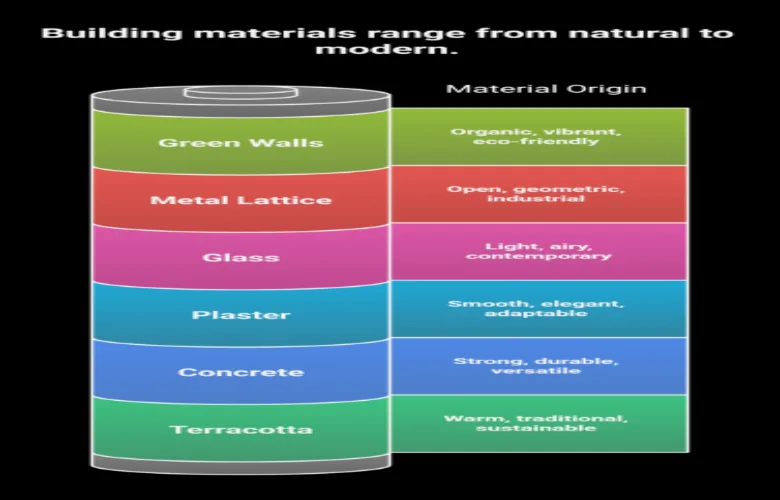
All exterior finishes consist of a controlled palette of white plaster finish, exposed concrete tone finishes, terracotta composite panel finishes, glass finishes. Each finish was selected based upon their specific application — durability for warehouse areas, clarity for office areas, warmth for visual equity. Metal lattices added an element of depth to each elevation.
LIGHTING & ATMOSPHERE:
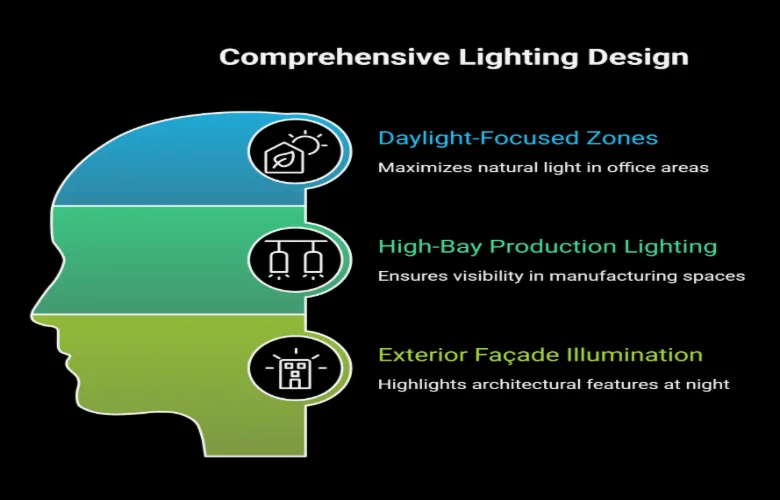
In order to maximize natural light levels and subsequently decrease energy consumption during normal operating hours, large glazing sections were installed in all office areas. High bay lighting was chosen for production areas due to the need for consistent light levels across these spaces. Façade up-lighting and canopy lighting were chosen to emphasize structural lines and create a greater sense of awareness about the buildings presence after sunset.
COLOR & TEXTURE:
Colors used throughout this project included combinations of white, gray and terracotta along with varying degrees of vegetation. Texture varied significantly throughout the façade, from smooth plaster, reflective glass, rough concrete to perforated metal to provide visual interest without creating excessive visual clutter.
FURNITURE & JOINERY (EXTERIOR INTERFACE):
Canopy structures, façade screens and other architectural elements functioning as part of an integrated exterior interface rather than being applied elements have followed a consistent grid logic that reinforces the building’s structured identity.
VISUALIZATION & EXPERIENCE:
Visualizations for this project consisted of highly detailed exterior renderings which included daylight studies, material studies, and shadow studies. These visualizations allowed the client to visualize how all aspects of the façades’ proportions, planting locations, etc., would affect the overall appearance of the completed building prior to actual construction.
Can an industrial building have a strong visual identity?
A:Yes. The above project demonstrates how the combination of faience layering, contrasting materials and vegetation can give a building with a clear, distinctive appearance while maintaining functionality.
How does greenery improve an industrial façade?
A: greenery will reduce the surface temperature of an industrial building, filter out some sunlight, and soften its visual appearance, creating a warmer and more welcoming environment for both people inside and outside.
Why separate office and production zones in an industrial building?
A: Separating the two functional spaces allows for improved working processes (efficiency), increased safety for employees and clients visiting the site, and creates a clearer experience for all users of the space.
Is glass practical for use on an industrial facade?
A:Glass is practicable when used in moderation in industrial buildings as it provides natural light to workspaces through the selective use of large windows without excessively heating the interior.
How is traffic managed within this project site?
A: A designated forecourt and defined circulation loop are used to direct heavy vehicles away from pedestrian access routes.
What role did visualization play in this industrial design?
A: Visualization played a key part in determining the optimal relationship between facade layers, combining materials, and incorporating environmental features into the final design before construction commenced.
Can these principles be adapted to different scales of industry?
A: The underlying principles of zonation, layering and environmental responsiveness can be applied at varying levels depending upon scale and industry type.