Client:
Robin Ahmed
Project Type:
Residential Interior
Location:
Boktaboli, Narayanganj.
Duration:
2 month 28 days
Area:
4,366 sq.ft
Project Overview
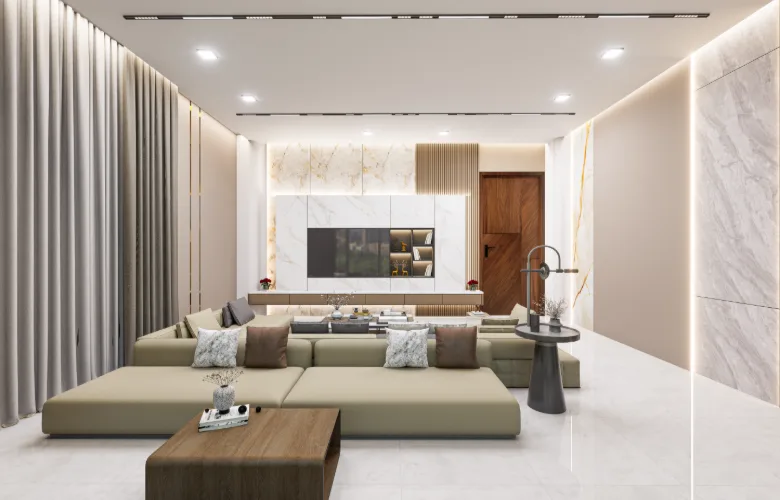
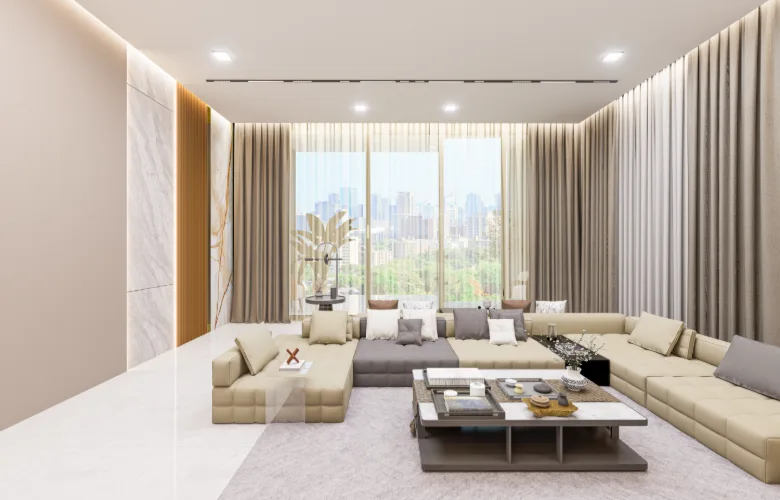
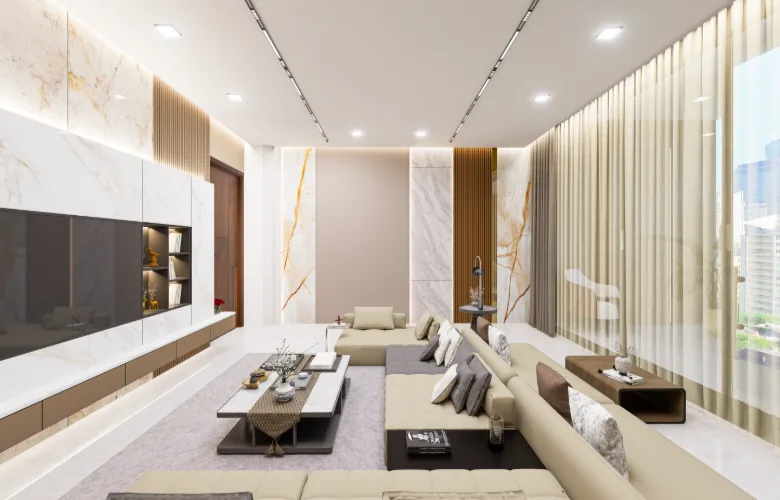
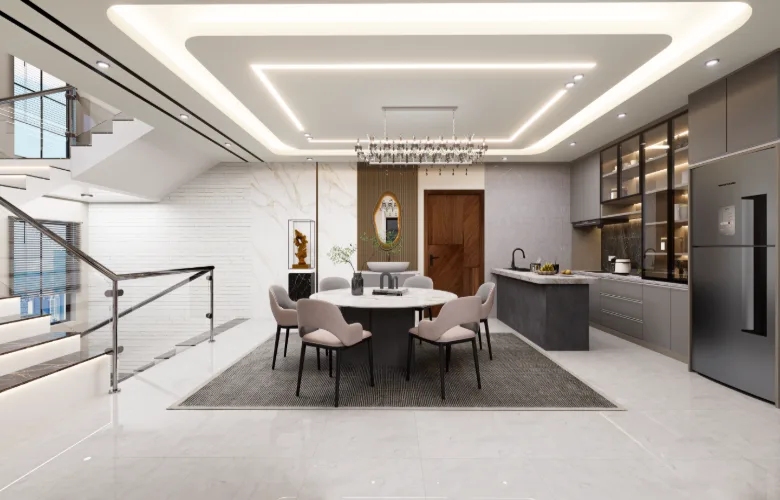
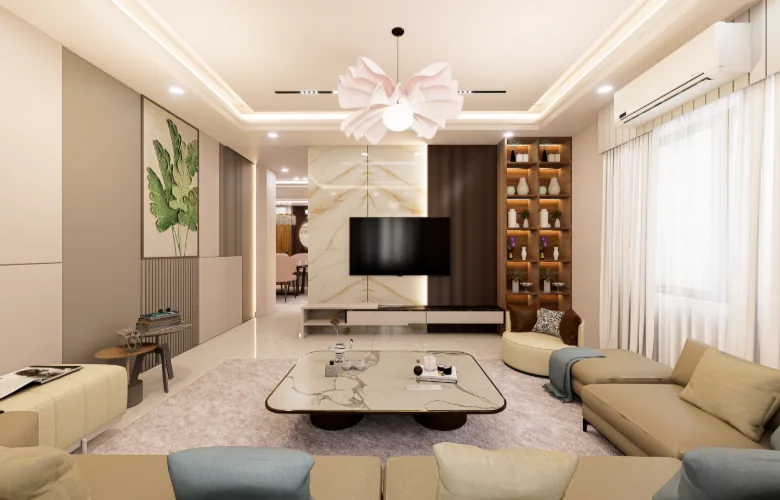
Robin Ahmed’s residence in Boktaboli, Narayanganj is a 4,366 sq. ft. modern family home created for an urban family looking for peace and quiet inside their busy lives. The project transforms an old building into a seamless and bright interior with common living and private living spaces. The main objective of this design is to build a sense of warmth with layered lighting, and to have a minimalist material palette to create minimal visual clutter. One element that makes this project unique is how it converts the physical limitations of a space into sculptural elements while maintaining a cohesive and peaceful presence throughout the entire house.
Project Story :
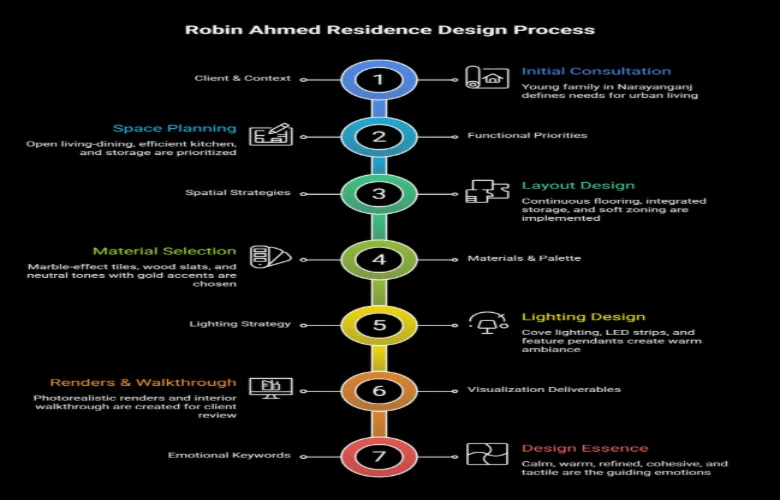
At first, there wasn’t a blank canvas. There was an existing staircase, many different door positions and unequal wall heights which divided the space. Instead of trying to force the design to fit perfectly in the space given, we decided to incorporate these irregularities into our design language — to view structural obstacles as opportunities instead of limitations.
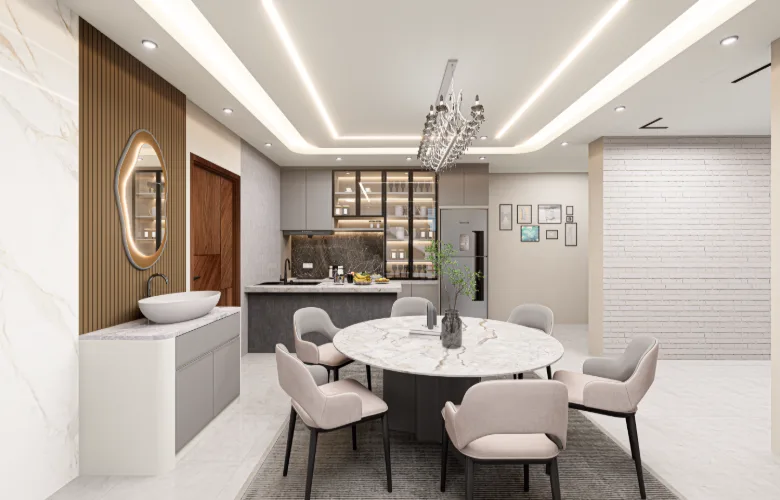
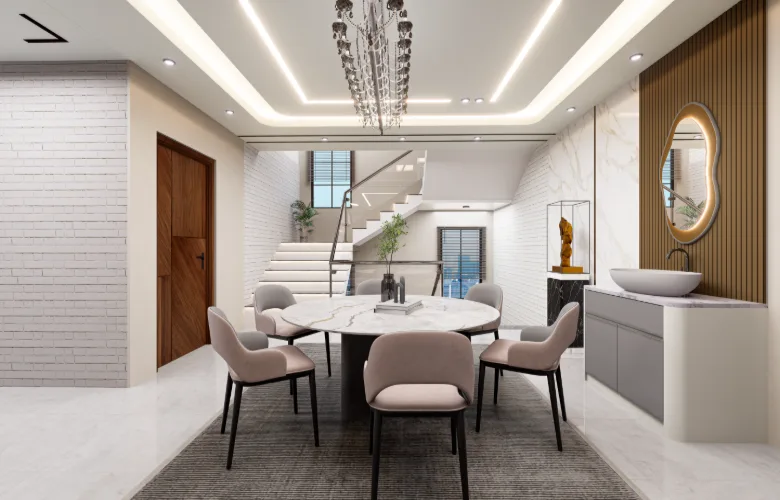
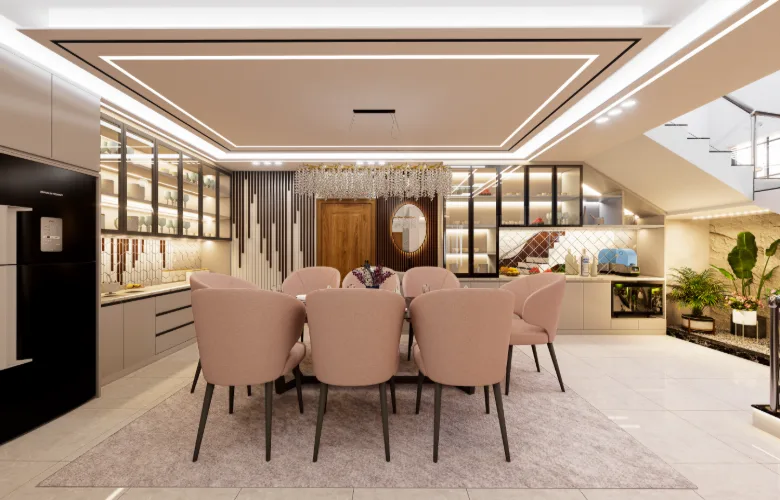
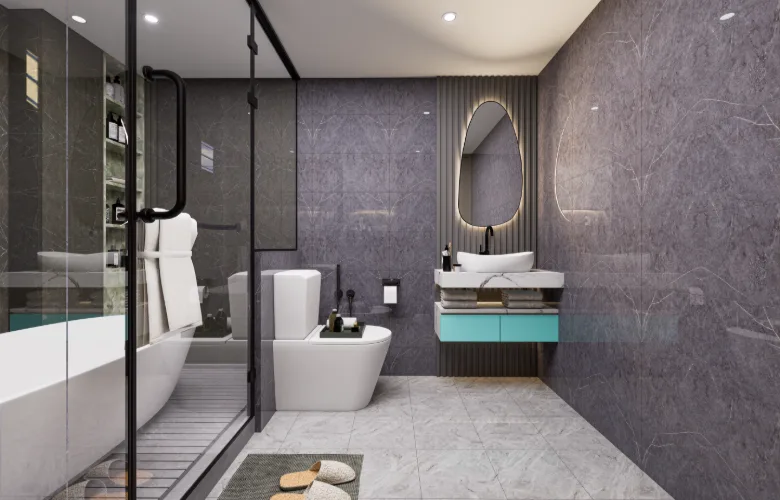
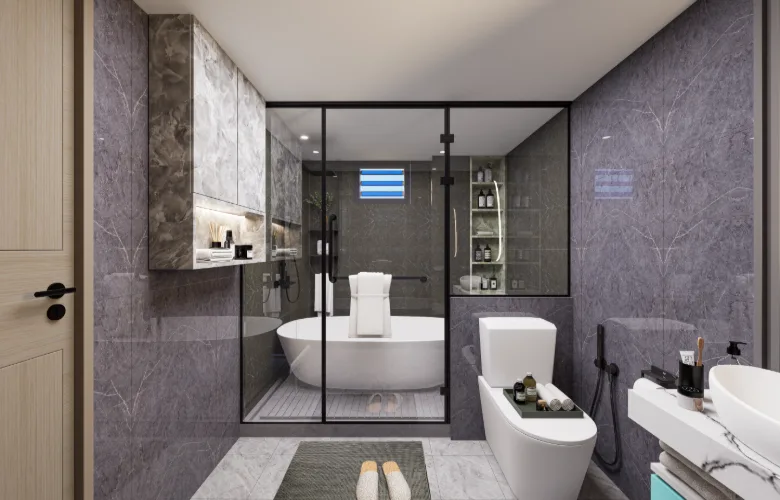
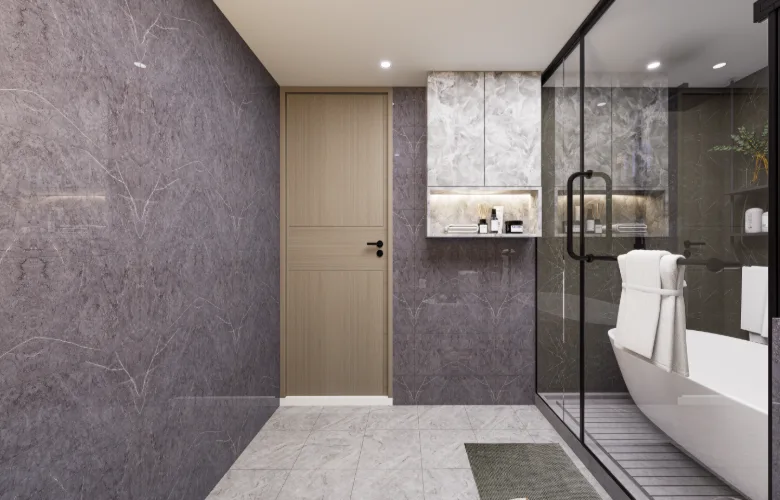
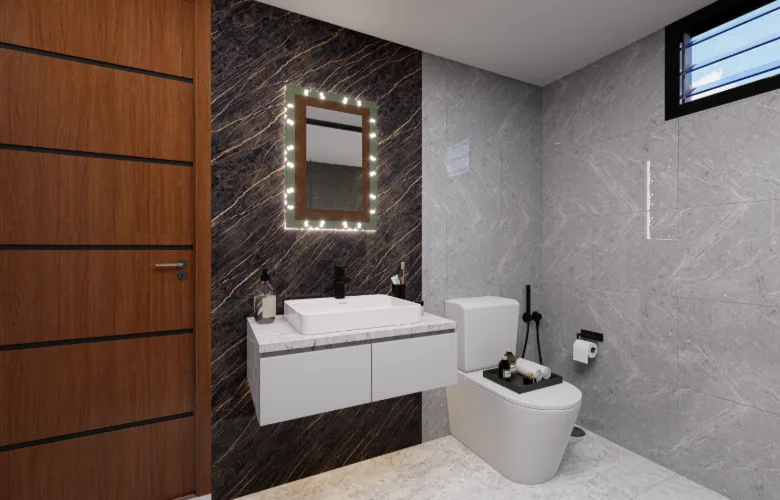
This family wanted a house that would be active every day but at the same time easy to live in. So the solution was to make the central area (living/dining/kitchen area) large enough so people could move freely and see each other while at the same time placing storage, utility elements, and all kinds of functional elements into walls and transition spaces. The under stair space was turned into a compact but very decorative powder room. It’s one of the best parts of the project.
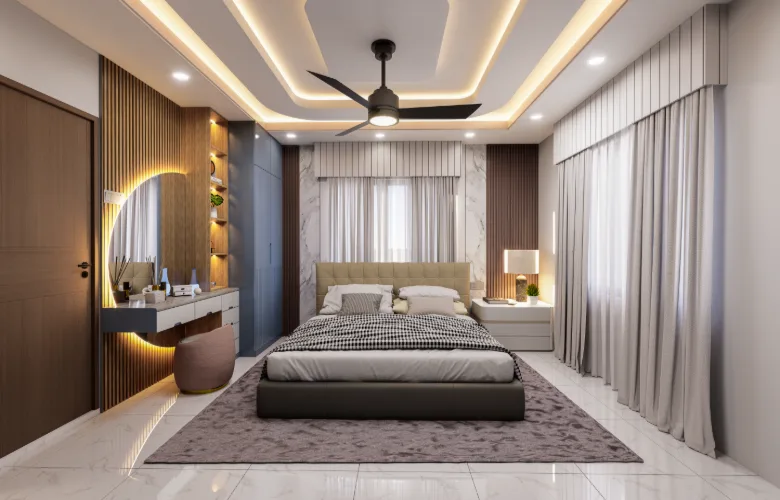
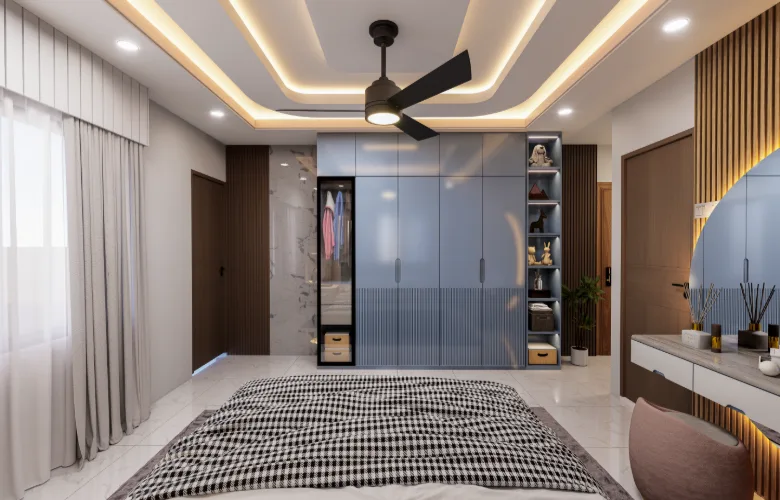
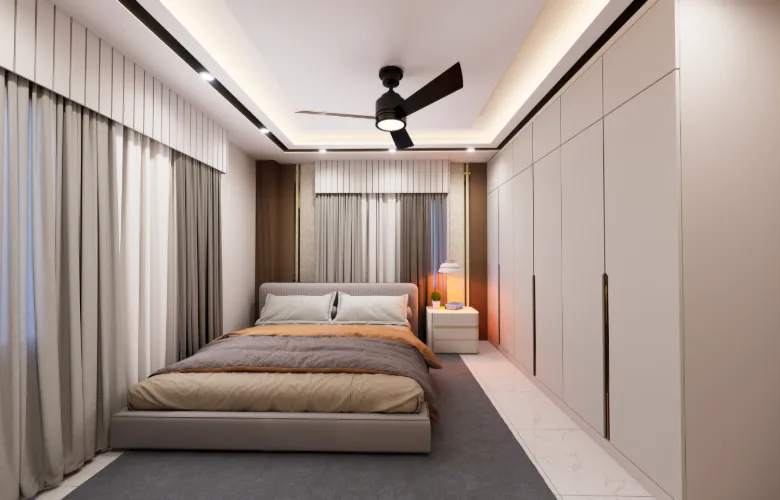
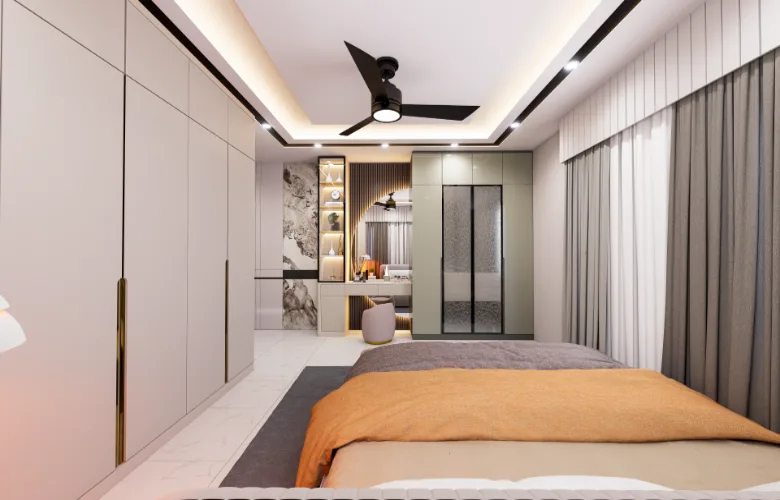
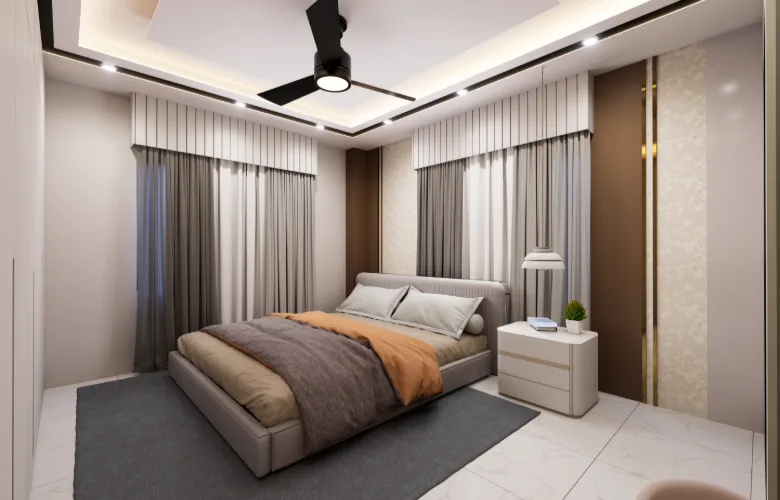
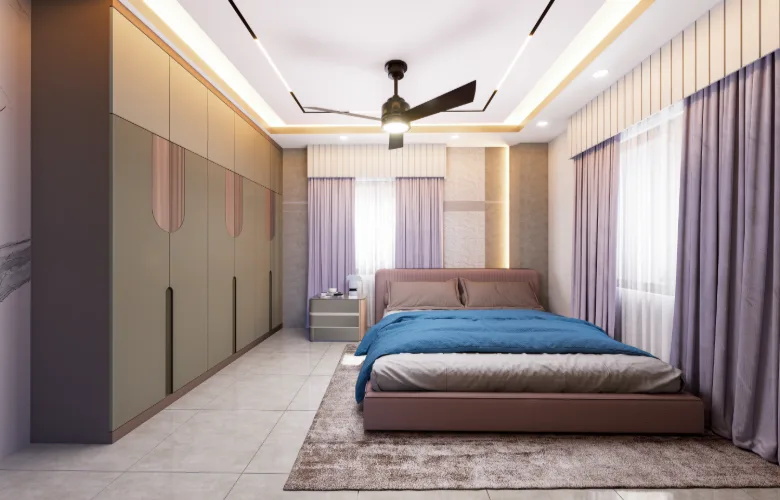
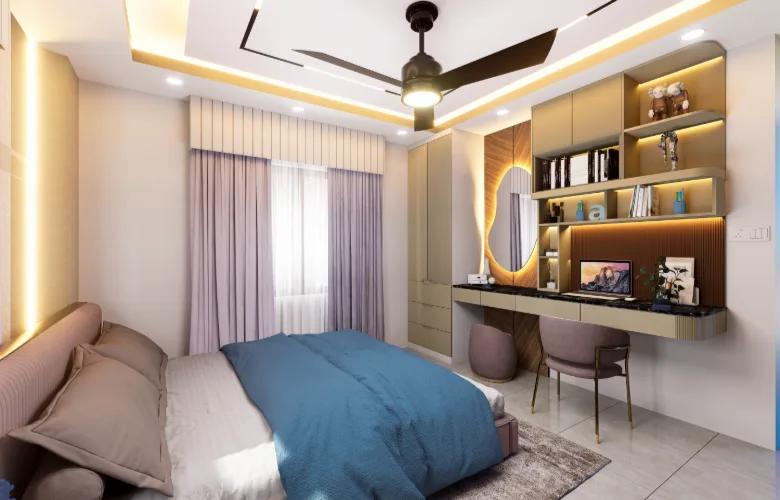
After making the material choices based on a logical discipline; keep the lower part of the house neutral, allow textures to express themselves. Repeating vertical slats, soft natural stone finishes and layering fabrics was done consistently throughout all the spaces to give continuity. The Master Bedroom has become an even more personal space, where the sculptural wavy wall creates movement in the space, without altering the total feeling of calm.
Overall, this project is less about expressing a specific aesthetic and more about being able to control, light, material and proportions to create a home that feels contained, warm and simply refined.
Project Insights:
Design Details:
Space planning:
To prioritize a defined central path connecting the living, dining and circulation zones, we gave private areas a slight recess to create a mental separation without partitioning off the spaces completely. We incorporated study area, vanity area, etc., as well as storage into wall thickness so as not to interfere with traffic patterns.
Materials & Finishes:
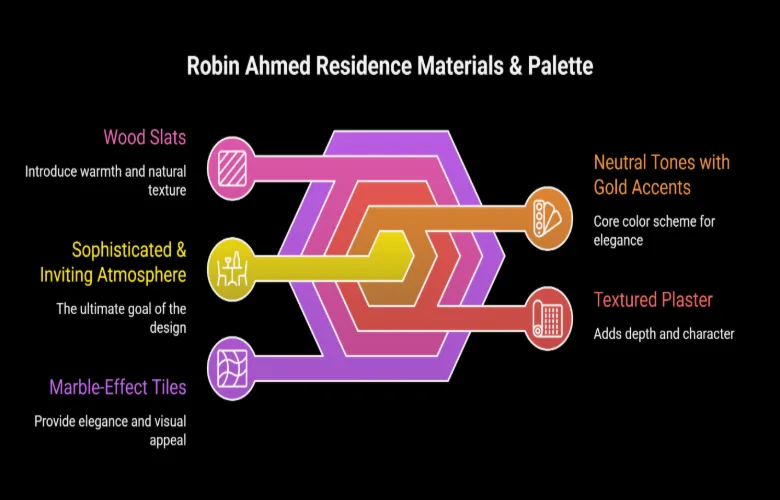
With durable marble effect porcelain tile unifying the floor surface, walls are alternately painted matte, fluted wood or textured surfaces. Consistency in laminated woods (warm brown and taupe) across cabinetry ensured consistency across both cabinet types. Sparsely added metallic accents maintained balance.
Lighting & Atmosphere:
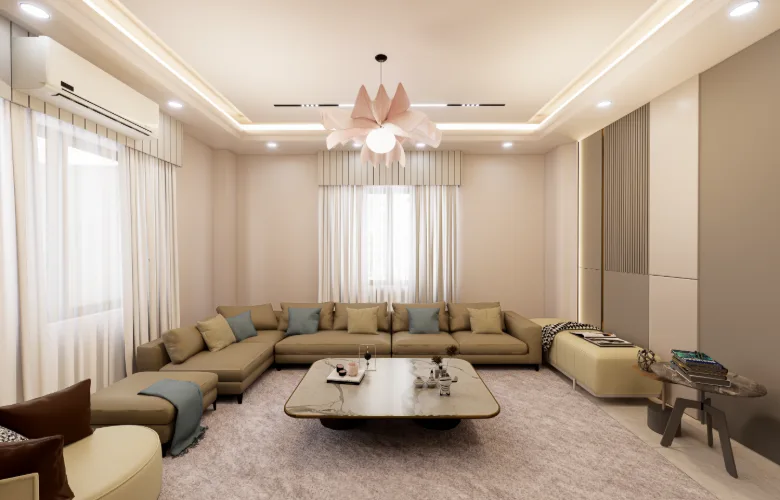
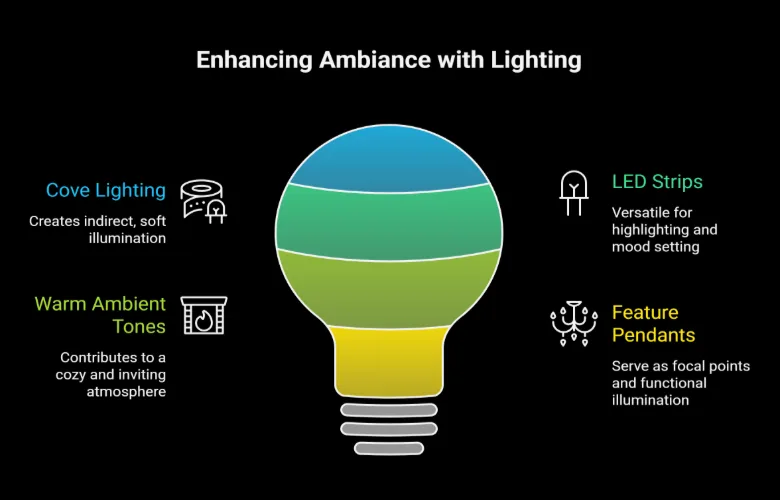
We established a layered lighting system defining ambiance. Cove lighting and concealed LED strips provided a soft ambient foundation, while pendant lights and chandeliers acted as focal highlights. By utilizing warm color temperature we allowed for a comfortable transition from daytime to nighttime use.
Color & TextureL:
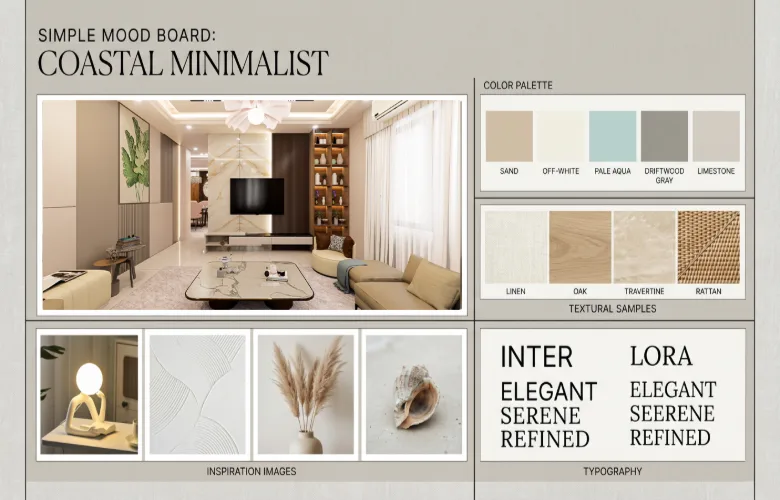
Utilizing a controlled neutral tone palette (beige, taupe, gray and walnut), we utilized texture to generate visual interest. Tactile contrasts created depth in lieu of chromatic contrast creating an environment free of visual clutter.
Furniture & Joinery:
With custom joinery ensuring precision alignment with architectural elements, we chose dining tables and TV units as sculptural anchors while adding softness through upholstered furniture. We embedded storage throughout the space providing visual cleanliness and organization.
Visualization & Experience:
The project was developed utilizing high-resolution static renderings as well as virtual spatial walkthroughs so that the client could review and test various material combination possibilities, light intensities, and focal elements prior to construction. In doing so, we were able to reduce ambiguity during the decision process, minimize changes made at site, and ensure that our conceptualization was realized as built.
A: Rather than trying to hide these conditions, we chose to incorporate them into the design — using slat paneling, custom cabinetry, and light to visually organize the irregular geometry.
A:Yes. We selected finishes (such as matte laminates and porcelain tile) based on their durability and low maintenance characteristics.
A: Yes. Recessed and indirect lighting techniques used in this project help create a sense of minimalism or non-visual massing, which can also be very beneficial when working with lower ceiling heights.
A: Yes. All the custom cabinetry in this project was designed to fit the specific size requirements of the clients and/or families they have worked with, making it possible to adapt to a wide variety of different homes and projects.
A:Yes. The amount of light, types of materials, and placement/treatment of focal walls were all determined/modified extensively through renders prior to construction.
A:Yes. Although the scale may differ from larger single-family homes, many of the same concepts — such as neutral color palettes, incorporated storage systems, and layered lighting systems — can improve perceived space in smaller environments.
A: While it has been a unique challenge in every way, I believe that perhaps the most defining aspect of this project will be how we achieved a balance between restraint and expression throughout the project; especially evident in features such as the wave patterned master wall and under-stair powder room without affecting overall harmony.
Kazi Family
Since 2010, a Dhaka-based interior and architectural firm with 873+ completed projects across Bangladesh. We specialize in residential, commercial, and hospitality spaces, delivering end-to-end design and execution solutions.