Is interior design just decoration? No, it can also be a frame for life. By interior design for home, I don’t just mean furniture or colors; I mean a work that combines human behavior, light, contact with nature, usage, and emotion. In today’s article, we will see how lighting, space layout, fabrics and materials, and budget can all be combined to create an effective, beautiful, and timely home interior. We will give practical examples, give measurements, and also keep the local context—Bangladesh—in mind. So, let’s get started.
Modern Interior Design for Home
Have you ever wondered why light colors and minimal furniture in a small room give such a calm feeling? This is exactly the key strategy of modern interior design for home. The focus here is not only beauty, but also ease of living. Keeping the right proportion in the wall cabinet design makes the room feel large even if it is small. Light layering with the ceiling design spreads the light smoothly and keeps the mood fresh.
The question is, where should the furniture be placed? Modular sofa or TV cabinet placement can also keep small spaces comfortable and uncluttered. Dressing table design is also important here. Not only beauty, it makes the morning routine quick and convenient.
Another thing—material. Wood, linen, marble or recycled furniture—when used correctly creates a comfortable, durable, and beautiful environment. Looking at examples from Kazi Family, you can understand how minimalist form and function work together.
Interior Design for Home Cost
Even if the design is beautiful, everything is incomplete if the cost is not calculated. Interior design for home cost is determined by the size of the space, furniture and materials. Usually, a large part of the budget goes to the floor, ceiling, wall cabinet design and lighting fixtures.
But with proper planning, it is possible to design effectively at low cost. For example, using modular furniture or locally sourced materials reduces installation and maintenance costs. In duplex house design or small home renovation, budget-friendly solutions can often be found by reusing and adapting.
Another trick is phase-based budget planning. First, fix the structural and essential furniture, and then add aesthetic or decor elements. This keeps the interior design for home cost under control, and benefits both the designer and the homeowner.

Low Cost Interior Design in Bangladesh
Affordable interior in Bangladesh? Ask first—what materials and plans offer the most value? No matter how limited the budget, good design is possible. Small budgets don’t reduce opportunities proper planning increases opportunities. Rather, this is the opportunity when your creativity can show its true form. What are you thinking?
In the context of Bangladesh, there is no alternative to expensive imported materials! This is where the real surprise comes in. When the local materials that are around us – clay, bamboo, and kantha work – are combined with modern design, a unique statement is created. According to a report by Arch Daily, when you expose a simple cement floor by polishing it and giving it a natural finish, it not only reduces the cost, but also gives an industrial-chic look. Now let’s talk about storage. What can be done to save space in a small flat? The walls are your best friend! Make floor-to-ceiling wall cabinets, and you will see that unnecessary clutter has been reduced. And then there is the matter of lighting. There is no shortage of natural light in Bangladesh – use that light with large windows and light-colored curtains, and your electricity bill will automatically go down. So what’s the point? Intelligent planning, maximum use of local resources, and functional design – these three mantras are the real secret of low-cost Interior Design for Home in Bangladesh.

light design for home interiors
Lighting is simply how a room ‘looks’ — it sets the mood of the building. Natural lighting makes the room and the people both comfortable. The secret to making a room useful throughout the day lies in the proper use of lighting. There are three levels of lighting – Ambient, Task and Accent. When these three levels are properly arranged, the same room can be used for three different purposes – morning, afternoon and night.
The combination of general light and task light in the morning makes the room busy. In the afternoon, if the work light is reduced and decorative lighting is added, the room becomes suitable for chat and tea. And at night? Just by keeping the decorative lights on, the room turns into a perfect place for stories or relaxation.
This way, this technique of lighting makes a single room versatile for the whole day. The idea of this layering works to create a living experience; every corner of the house has its own view. Detailed explanations and project examples are well discussed in Arch Daily’s lighting articles — you can check them out to see the importance of layered lighting and its practical applications.
Many people think that LED = cheap solution. No. Color temperature (kelvin), rendering index (CRI), dimming ability — these are the main things that create a good experience. For example, using 2700–3000K for general lighting in the home and 3000–4000K for task lighting is both beneficial to the eyes and to the mood. Utilizing daylight is also a great cost-effective strategy; using windows, lightwells or double-height spaces can reduce the need for artificial lighting at night. The RIBA’s discussion also says this: natural light enhances the indoor experience and provides environmental feedback.
Practical tip: Have 3–5 light sources in each room—floor lamps, task lights, in-game or top lights, and accent lights. It is recommended to have 5–7 sources in the living room or dining room in particular—this adds variation and makes the space feel more meaningful.

home interior design ideas for living room
The living room is the main attraction place of a home. How you will sit there, where the light will fall, what will come to everyone’s attention first, these are planned.
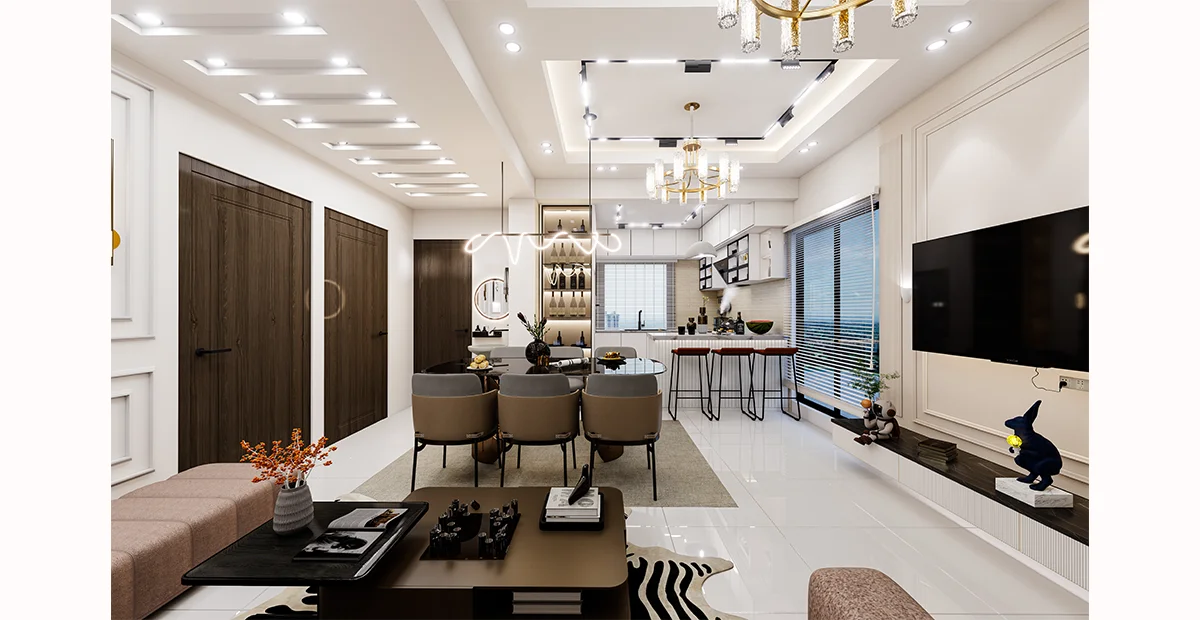
Layout strategy: Don’t keep everything unprofitably straight. Having a central sofa set means everyone’s focus is in one place; but using a modular sofa or rolling table in a small apartment can quickly reconfigure the space. Kazi Family’s analysis of the power of modular solutions is clear—where the seating arrangement can be changed, the space works when the needs of life change.
Furniture and circulation: Keeping the circulation path clear is very important. The height of the TV cabinet, the distance from the back of the sofa to the king wall — these small dimensions provide great comfort. When choosing a TV cabinet, you need to think about it — whether you will choose a low-profile or statement piece based on how much storage you need. Designing a small or medium wall cabinet in the living room looks very beautiful. However, wall-mounted or foldable cabinets ensure proper use of space.
Palette and Texture: If texture is matched with bright light king room, then the room looks much larger. But if over textured, it looks blurry; so it is better to focus on one or two handled textures. For example: use rough linen cushions, smooth marble side-tables, wooden TV cabinet. At the same time, highlighting the texture of the walls with accent lights—it easily gives a hotel-like feel.
Case Study Insight: Double-height living increases the coordination of lighting and furniture—the volume can be controlled with pendant lights.
Interior design ideas for home decor:
Decor is actually the sum of small choices. Texture, wall treatments, and accent pieces—all work together.
- Wall treatment: depth is obtained by mixing paint textured plaster or wood paneling. Deep charcoal or warm beige works for an accent wall.
- Furniture alignment: count the furniture; Give at least 24 inches of side circulation, and 18 inches at the bedside will do.
- Cushions, rugs, carpets: texture layering looks lovely. Small materials like jute rugs are regionally apt and sustainable.

Interior design ideas for small homes in low budget
If the budget is low and the space is also low, then we should choose a minimal design. Here are some strategies such as — space audit, multifunctional furniture, and local materials. Now we will discuss in detail:
- Space optimization: Initial work — measuring. Where will circulation be obstructed, where will height be useful — the trick is to answer these questions. Use volume between the four walls: drawers under the bed, shelving high up, or loft storage.
- Multifunctional furniture: Bed with storage or low-framing, modular sofa, or furniture-on-wheels — these make small spaces look bigger. Kazi Family has a discussion of calibrated modular and rolling furniture — furniture on wheels actually allows you to reconfigure the space.
- Local considerations (Bangladesh): Using local wood or PP/fiber board reduces costs. Apart from concrete tops or marble, polished concrete or ceramic tiles also provide elegant finishes. Renovation-friendly strategies — upgrade existing wall cabinet design, paint/face instead of replacing doors — this reduces costs significantly.
- Costing calculation: Interior Design for Home costs are quite variable. There are many costs including branding, materials, maintenance. But in reality, to make a low budget, about 30-40% of the total budget should be considered for furniture/fixtures, 20-30% for materials and finishes, and the rest for labor and incidentals. But it is the framework; Project wise calculation will be different.
Practical tip: Do a compact prototype first — try changing a small part. Once the function works, roll out the rest. This saves both time and money.
Interior design for bedroom
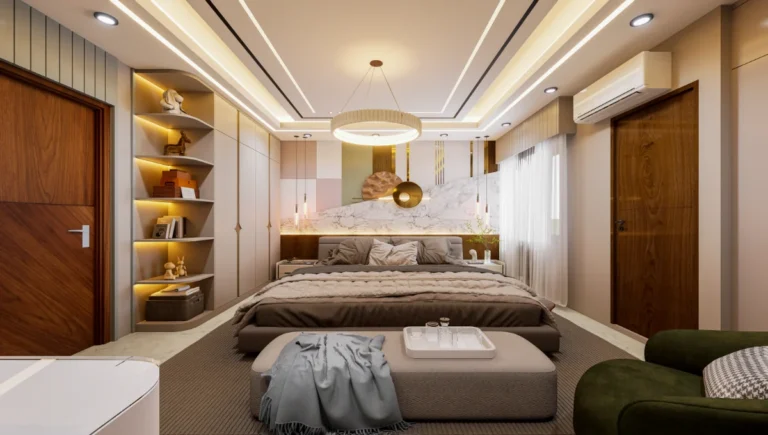
The bedroom is the most personal space. Here, psychology, lighting and acoustics are the most important.
- Psychology: Color and light temperature make people relax or alert. Light light gives peace to the body and mind. Using a light textured wall on the headboard, bedside or one side of the room, it is easier to be intimate or secluded.
- Layering and privacy: Bedside lamps, reading lights, and soft overhead lighting should be placed. Control sound by padding acoustic panels or hard surfaces with rugs — if there is a basement or reverse-plan in a small flat, the sound problem increases. Keep a mirror and proper task light in the dressing table design; this makes the work easier.
- Storage and clearance: Under-bed storage, wall cabinet design also reduces the clutter of the room. In a small bedroom, arrange the door and bed placement in such a way that frequent circulation is ensured.

Duplex House Interior Design
A duplex house is not just a house; it is a concept of creative thinking, vision, and movement. Designing flow, visual connections, and light transitions is essential when designing a duplex house.
- Volume and Light Transfer: Double-height spaces can bring light down from above—using skylights or lightwells allows natural light to reach the lower levels. See double-height projects on Kazi Family and see how double-height living rooms change the internal interaction of the family—dramatizing the sense of earth-volume.
- Stairs and Visual Direction: The alignment of the stairs and the design of the railing can divide or unite the volume. A good example—one that allows a cross-view of the stairs and allows light to penetrate in between. In duplex house design, the TV cabinet or wall cabinetry is attached to the lower unit, leaving the upper volume empty and orderly.
- A practical experience: In a city like Chhota Delhi, adding double-height living to two-story homes increases natural ventilation and cross-views inside the home—not only aesthetically pleasing, but also practical. These techniques are well illustrated in some of the duplex case studies by the Kazi Family.
Interior Ceiling design
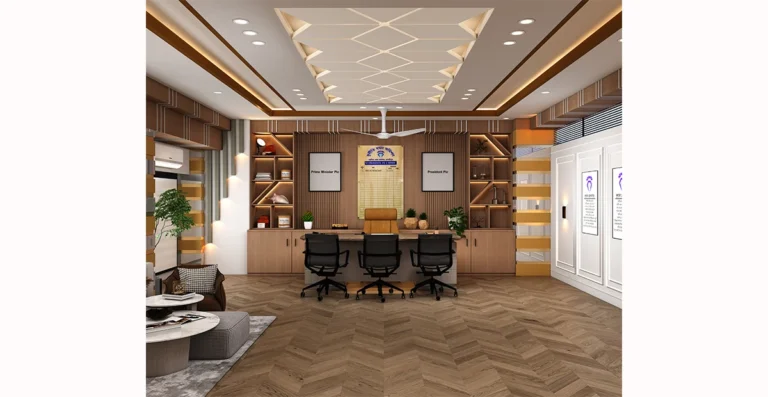
Ceiling design: The ceiling is not just a cover—it is a tool for controlling light and noise. Creating a relief on the ceiling with consolidated polyester or corner covers spreads the light layer beautifully. In-wall linear lighting or pocket lighting can make the ceiling part of the volume.
Kitchen design: Kitchen design means planning—the work triangle (sink, hob, fridge) is still effective. In compact kitchen design, open shelving, inbuilt cookers, and surface-materials can be kept durable while controlling costs. In low cost interior design in Bangladesh, locally produced countertops and custom cabinetry are more effective. Kazi Family’s renovation section has ideas for kitchen transformations in Bangladesh or similar climates.

Interior Design for Home Conclusion:
Tomorrow we may see more adaptive, smart, and emotional homes. Home parts are not just architecture they are now feelings too.
Material integrity, local expertise, and lighting orchestration will make the interior design for home of the future truly sustainable and humane. A short note to add—among those working on local practices and design documents are offices like Kazi Family, who use architectural principles and culture to design in harmony with reality. We design our culture-based yet modern standards.
Frequently asked questions of interior design of a home
Is interior design just plenty of edgy tricks or full of returns to basics?
Ans : No. Home interior design goes beyond decoration to affect daily living. It combines light, space planning, material, human behavior and emotions to build a house that is high in preservatives functionality, comfort yet aesthetically pleasing.
How do modern home design interiors work in (and for) small spaces?
Ans : Contemporary interior design is a celebration of sleek lines, can be way off and uses low-key color. Intriguing wall cabinet dimensions, a range of ceiling lights and some sensible furniture placements naturally combine to make small spaces seem bigger.
3.Can I cut the cost of interior design for home?
Ans: Budget-driven ideas can be the use of local materials like bamboo, clay or kantha base budget planning as well as modular based furniture and reutilization of previous fixtures.
4.What are the best home lighting techniques?
A: Layered lighting — which involves ambient, task and accent light sources can help a room function for a variety of purposes throughout the day. Abuse of natural light, mix floor and ceiling lamps, and use proper color temperature (2700–4000K) with your mood in mind.
5. What is the price of Home Interior Design in Bangladesh?
Ans: The cost of each interior design within the home in Bangladesh typically varies between 700-1500 Rupia/ sq foot based on the materials, style, and the area. The interior luxury design might be more expensive in Bangladesh, and the low costs interior design agreement can be offered to homeowners who have limited finances.
6. Is it possible to enquire Low Cost Interior Design to Home?
Ans: Yes, you will be able to experiment with low-cost interior design in Bangladesh through modular furniture, plain wall paint as the alternative to wallpaper, and up-to-date but minimalistic design ideas, which will not cost a lot of money or space.
7. What is different about Luxury Interior Design for Home?
Ans: Luxury Interior Design for Home, is specialized in luxurious finishing, imported material, designer lights and custom furniture, which gives your place a high quality and fancy appearance.
8. What is the time spent in undertaking Home Interior Design in Bangladesh?
Ans: The time will be determined by the size of the project i.e. a 2-bedroom flat interior design can be accomplished within a 3-4 weeks whereas a more luxury interior design of the duplex house can be finished within 2-3 months.
9. Who is the Most Competent in terms of interior design of home, in Bangladesh?
Ans: The Kazi Family Architect and Consultant Company is reputable in offering the optimal interior design to home in Bangladesh as the company offers modern, cost-effective, and luxurious design to homes.
10. What are the trendy designs of Home Interior Design in Bangladesh?
Ans: Modern minimalist, contemporary, luxury, and Scandinavian style of interior design are the latest fashion in the interior design in Bangladesh which are very suitable to the local lifestyles and home structure.
11. What should we do to design an Interior of a small home?
Ans: To design a small home interior in Bangladesh, smart storage, bright wall colors, openness with mirrors, and functioning of a multifunctional furniture should be considered, to make the room appear bigger.
12. Should a professional be employed in terms of Home Interior Design?
Ans: Absolutely. Professional interior designer can design interior in Bangladesh home effectively- time-saving, less mistakes made and a beautiful and low-cost interior design is presented.