Client:
Adv. M. Kawsar Ahmed
Project Type:
Commercial Interior
Location:
Nahar Complex, CMM Court, Bakshibazar, Dhaka.
Duration:
9 Days
Area:
523 sq.ft
Project Overview
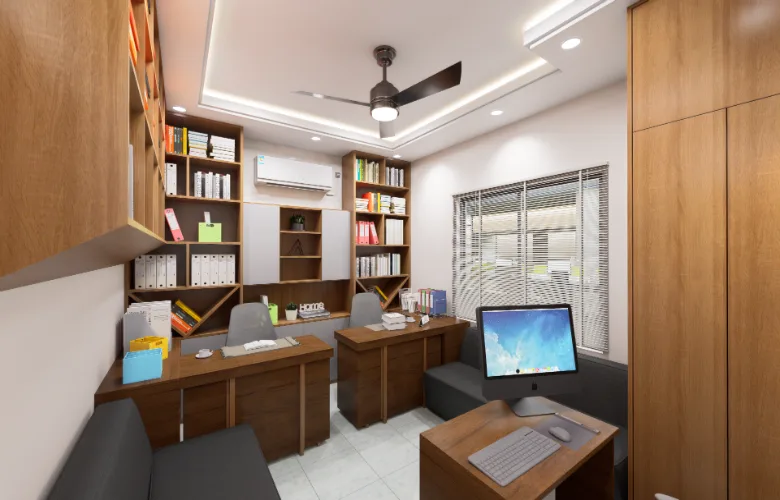
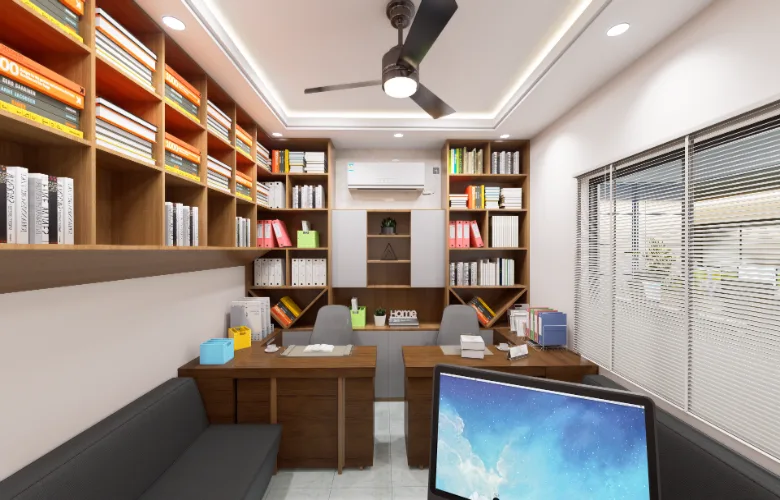
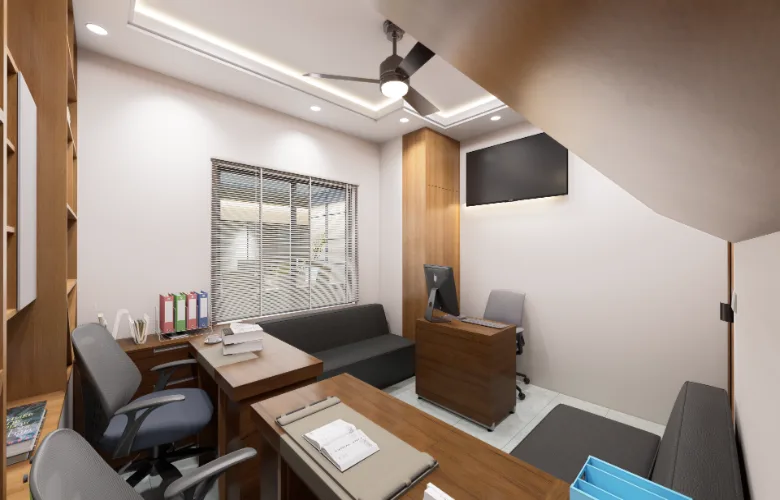
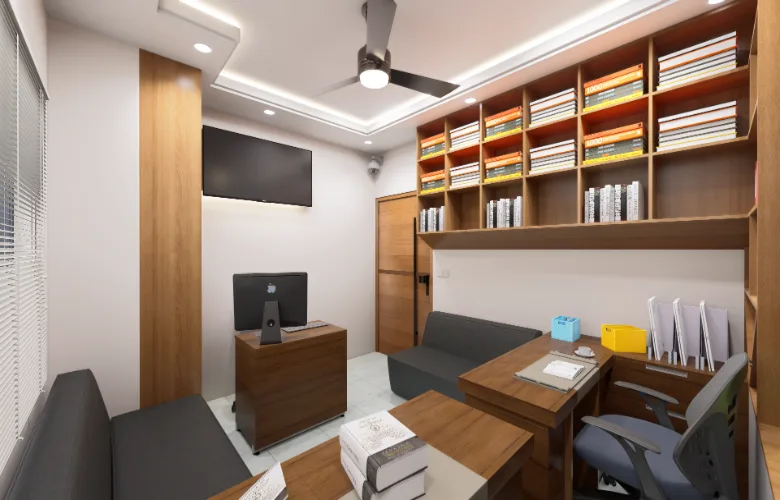
Adv. M. Kawsar Ahmed compact legal chamber is located on the second floor of the Nahar Complex within the CMM Courts Area. This interior design Project has been realized within a total space of 523 sq.ft, in just 9 working days. The main goal of this Project was to create an environment that conveys credibility yet maintains a welcoming atmosphere. In addition, this Project stands out because it adheres to a discipline of spatial usage – prioritizing clarity, functionality and organization over visual extravagance.
Project story
As opposed to hospitality or retail spaces, this Project had a unique type of pressure — establishing trust. A legal office is not simply a workplace; it is a place where sensitive discussions occur, and clients will rapidly determine if they can rely upon you based upon their initial impressions of your credibility immediately after they enter the office. Therefore, the client needed an environment that would convey structure and reliability yet would not be perceived as rigid or intimidating.
Due to the limited square footage, the design approach was pragmatic. Rather than creating individual rooms, the design integrated all functions including work stations, storage areas and seating for clients into one continuous configuration. The vertical bookshelf units were the foundation of the design; they provided significant volumes of space for storing vast amounts of legal literature and files while at the same time providing a visual reference point.
In terms of design language there was a purposeful restraint. There were no bold statements made — only measured decisions. Wood tones were chosen to provide warmth without diminishing formality while neutral colored seating maintained visual tranquility. All circulation paths were deliberately protected so that movement could be accomplished without interfering with existing work zones.
Overall, the chamber created here is a structured and productive workspace. It reflects the nature of law practice itself: methodical, organized and quietly confident.
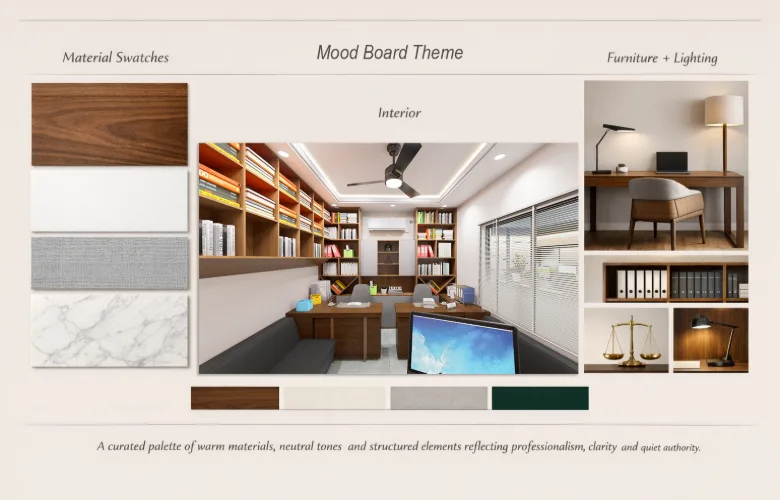
Project insights:
- Vertical bookshelf units maximize storage potential without encroaching upon usable floor space.
- All workstation locations have been optimized to allow for clear lines-of-sight and direct visibility for supervisorial purposes throughout the entire chamber.
- Neutral colors minimize distractions which allow employees to focus when performing intense task-oriented activities.
- Seating areas are integrated to facilitate rapid transitions from formal consultations to casual discussions.
- Window treatments can be adjusted to control levels of privacy as necessary for sensitive/ confidential client communications.
- Reliable lighting is evenly distributed and free of glare to create comfortable working environments for extended periods of time (i.e., reading, writing, etc.
- Multipurpose furniture eliminated redundant items in a confined space.
- Visual indicators of expertise and credibility are established via the presence of substantial collections of professional literature (books).
- Durability of materials utilized (wood, metal, laminate) assures longevity as these items will be subject to daily wear-and-tear by professionals using them.
Design details:
Space planning:
Layout planning has emphasized multi-user compatibility without compartmentalization. Work station positions are configured to enhance workflow efficiency while preserving personal work zone boundaries. Seating for clients is situated proximate to the users’ working zones to enable seamless communication without disturbing any activity currently underway.
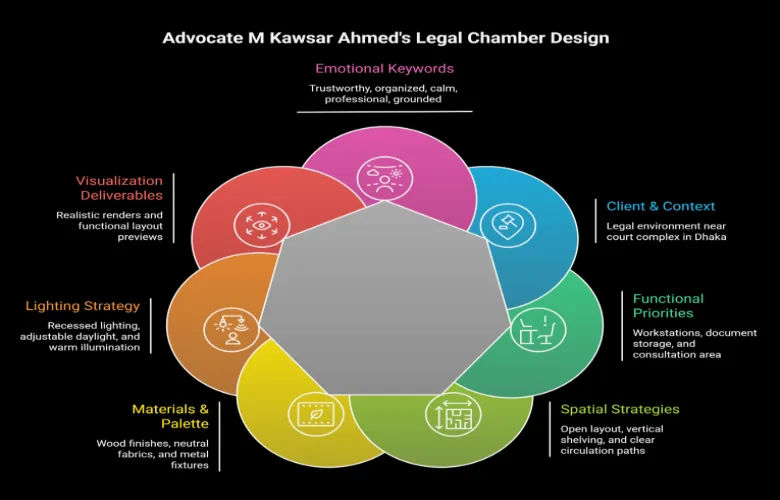
Materials & finishes:
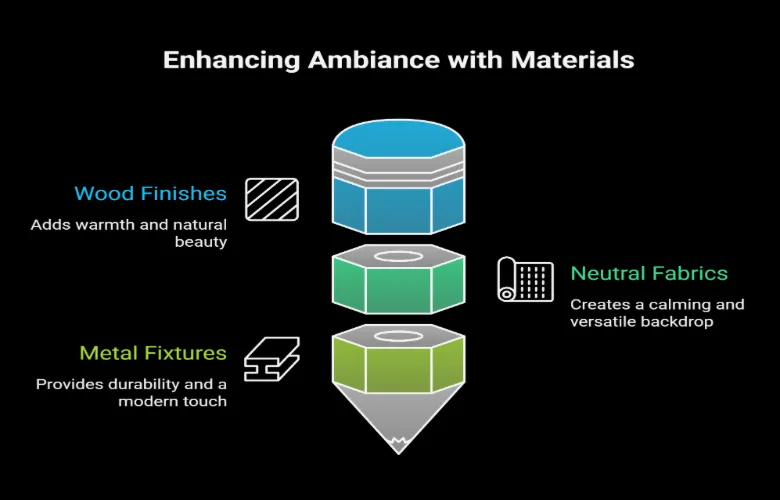
Wood dominates the material palette utilized for desk tops, shelves and cabinetry to impart a perception of stability. The matte finish applied to all surfaces minimizes glare and imparts a professional image. Structural clarity and durability are added by the metal components of hardware and other fixtures.
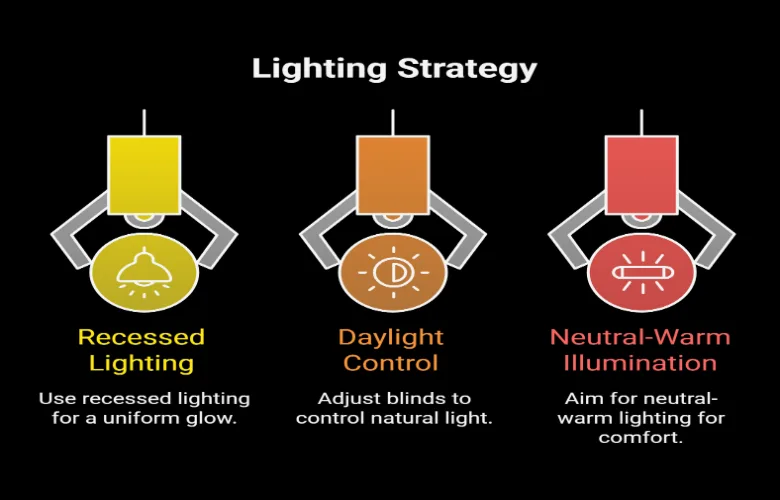
Lighting & atmosphere:
Consistent illumination for all working surfaces has been achieved through recessed lighting which is critical for documents-intensive tasks. Daylight input is modulated via adjustable window treatments which enables the space to operate in either an open or closed mode. The overall lighting quality is neutral warm rather than too bright or too dark.
Color & texture:
The restrictive color palette — wood browns, beige, gray — establishes a steady visual background. Subtle, matte textures are employed to reinforce gravity and avoid distracting visual interest. Occasional pops of color from files and books add an element of authentic living character to the space.
Furniture & joinery:
Custom shelving units have been designed to store large volumes of files while simultaneously being easily legible. Work stations are functional but uncluttered; capable of accommodating both electronic and paper-based work requirements. Sofas and bench seats are proportionate to the scale of the room so as not to overwhelm it.
Visualization & Experience:
Realistic still photographs were generated for photorealistic simulation purposes. Simulations include actual configurations of desks, lighting levels and storage capacities for realistic assessment prior to construction. Due to these simulations the decision-making process regarding shelf dimensions, seating placement and lighting levels occurred early in the development phase ensuring alignment of design intent with practical necessity.
What ways can you protect confidentiality when your law firm uses an open layout?
A: You will be able to achieve privacy by arranging seating so that it doesn’t allow others who enter the space to see into conversations. Window blinds can also be used to control light and limit visibility from outside. The location of conversations should not occur at entrance doors as it limits access and provides visual separation.
Will a smaller space be able to support an attorney or attorneys working together efficiently?
A:Yes, if vertical storage space is utilized and each piece of furniture serves a purpose beyond just being decorative. A well-designed floor plan can create space for multiple attorneys to work comfortably without creating overcrowded conditions.
Are there specific benefits of having shelving integrated into your walls in your law practice?
A:The primary benefit of integrated shelving is that they provide substantial amounts of document storage while providing evidence of organizational skills and expertise – both are essential for creating confidence in clients.
What types of lighting would you recommend for a lawyer's workspace?
A: In order to prevent eye fatigue from prolonged periods of reading and writing, it is highly recommended that a lawyer has consistent, glare free lighting. Glare is particularly detrimental because it creates distractions that could interfere with the quality of their work.
How can you achieve a balance between professionalism and comfort in the space that houses the lawyer's workspace?
A: You may incorporate warmth into your space with the incorporation of woods while maintaining neutrality with the remainder of your color palette. In doing so, you create a comfortable atmosphere while establishing the formality associated with the professional requirements of practicing law.
Is it feasible to complete such a project under extremely tight timelines?
A: Provided that the design for the project was clearly defined from the inception of the project and based upon materials and methods which are readily available, yes it is feasible to complete such a project quickly.
In what way(s) did visualization assist you in completing this project?
A:Visualization enabled your client to conceptualize how storage and conversation areas would relate to one another prior to construction. Visualization therefore reduced questions regarding the feasibility of various configurations thereby eliminating potential time consuming re-designs after construction had begun.