Client:
Md. Mahim Mia
Project Type:
Residential Interior
Location:
Manda, Sabujbag, Dhaka-1214.
Duration:
27 days
Area:
1,089 sq.ft
Project Overview:
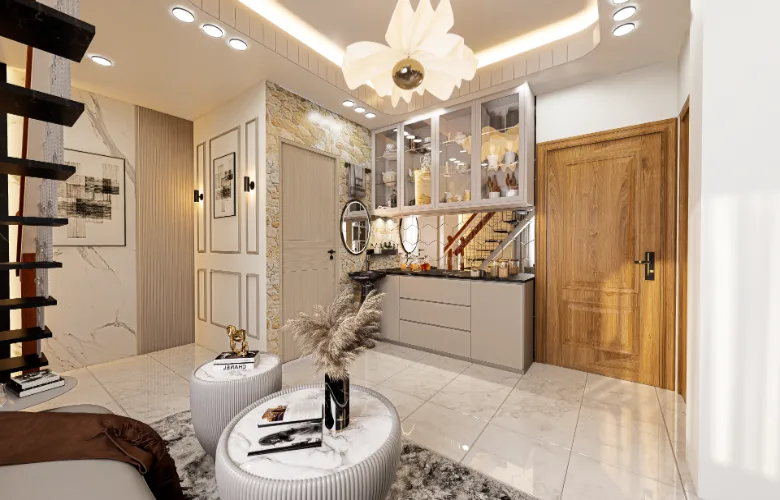
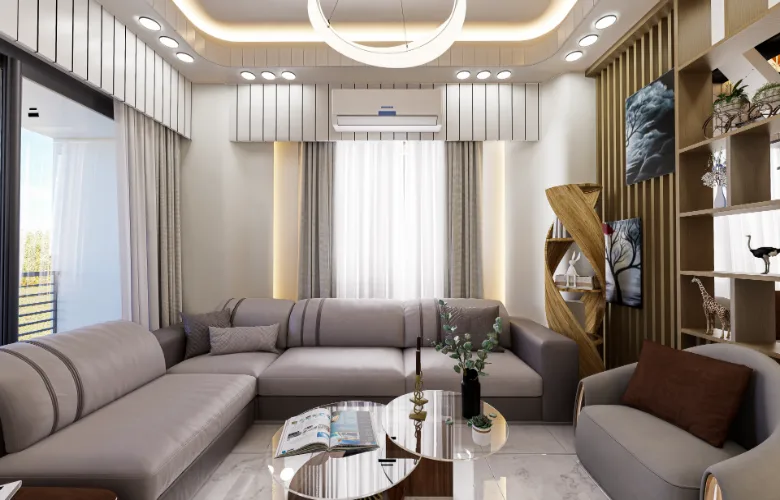
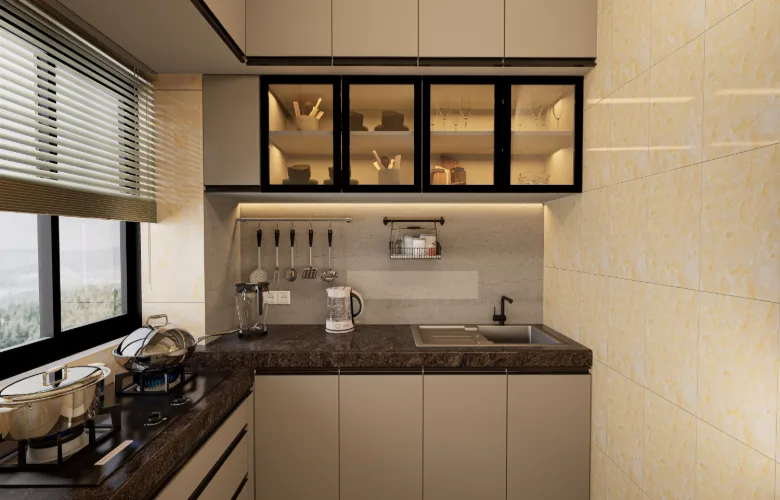
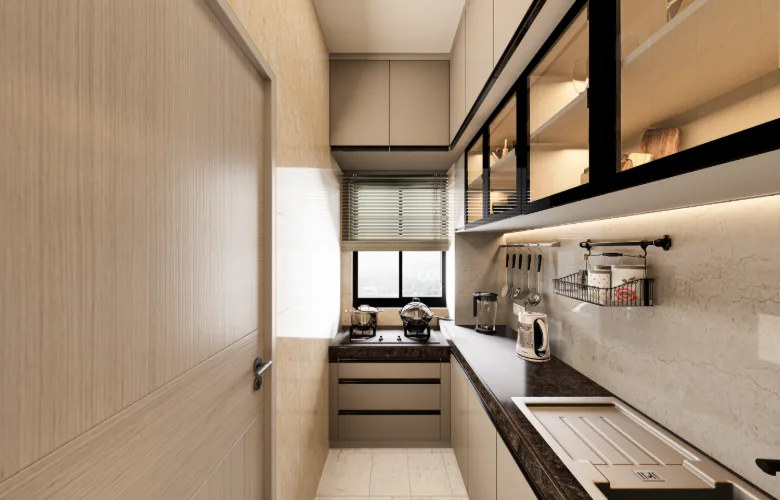
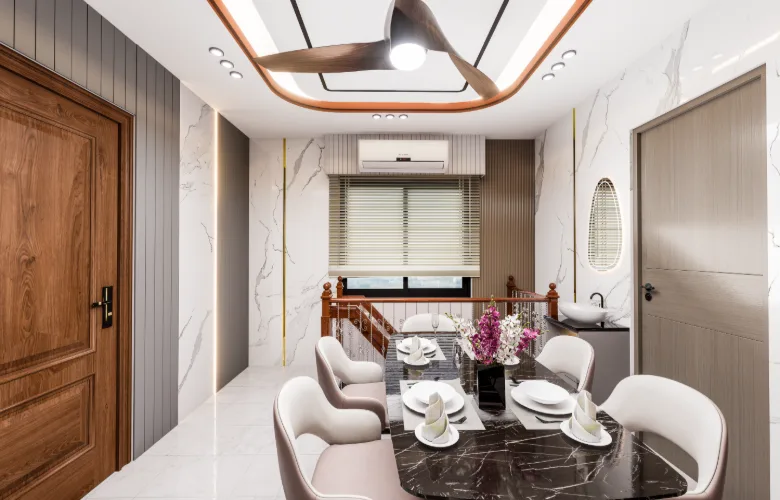
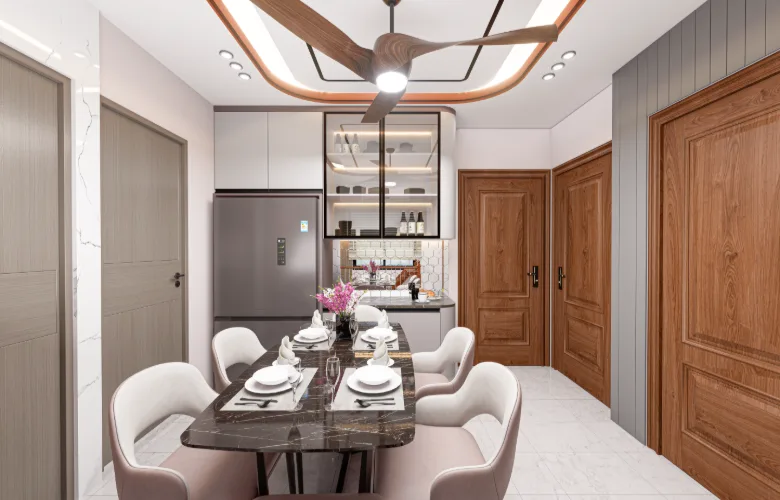
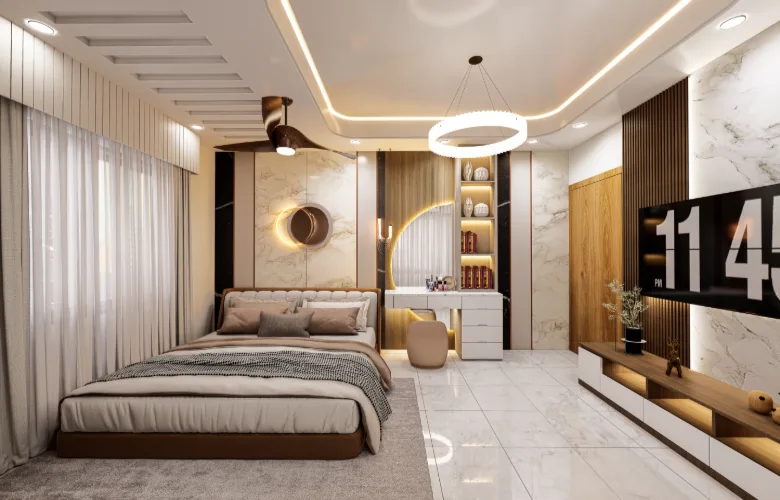
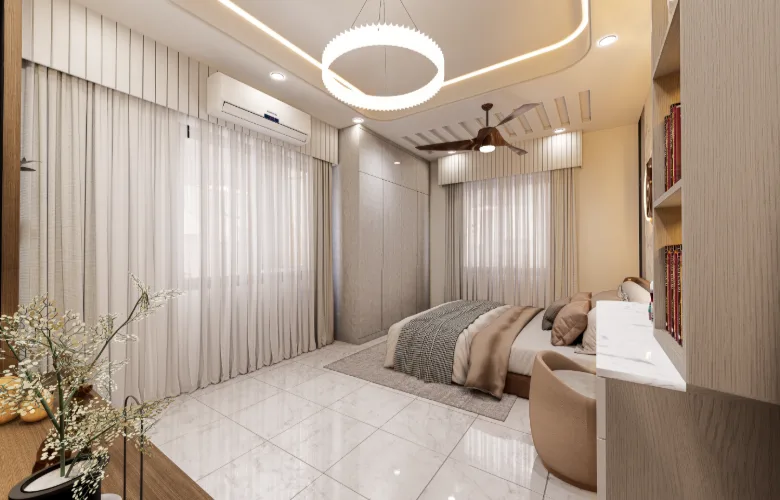
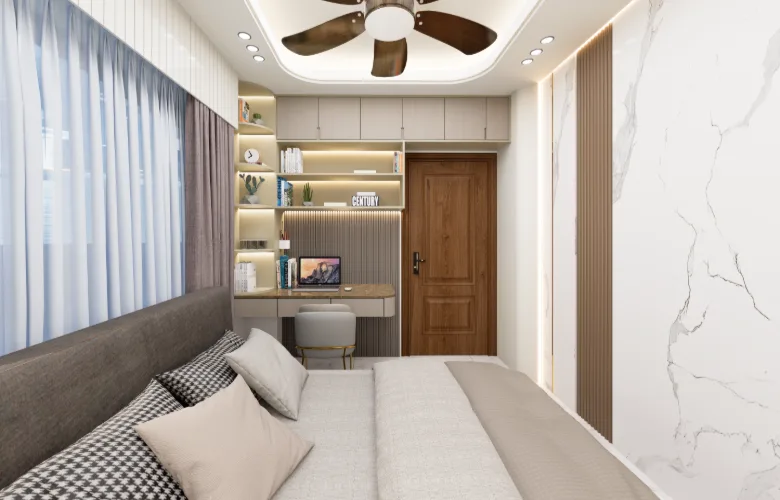
This is an intimate 1,089 square-foot residential interior for Md. Mahim Mia in Manda, Sabujbag, Dhaka. The project was created specifically for a young couple’s modern family. The primary goal of this project was to develop a warm and sophisticated contemporary living area, which could provide both comfort and visual appeal. In just one month, the design transformed an ordinary urban apartment into a spacious, open, and very functional home. The most distinctive aspect of this design was its ability to provide a sense of spaciousness and refinement in spite of spatial and structural limitations.
Project Story :
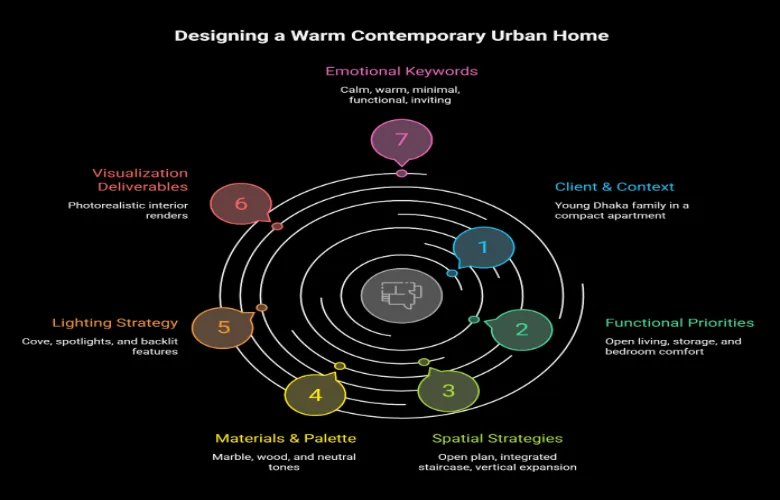
When I met with Md. Mahim Mia he clearly stated his requirements: He wanted to use all available space in his small urban foot print to make his new home comfortable and beautiful enough to entertain friends and guests occasionally.
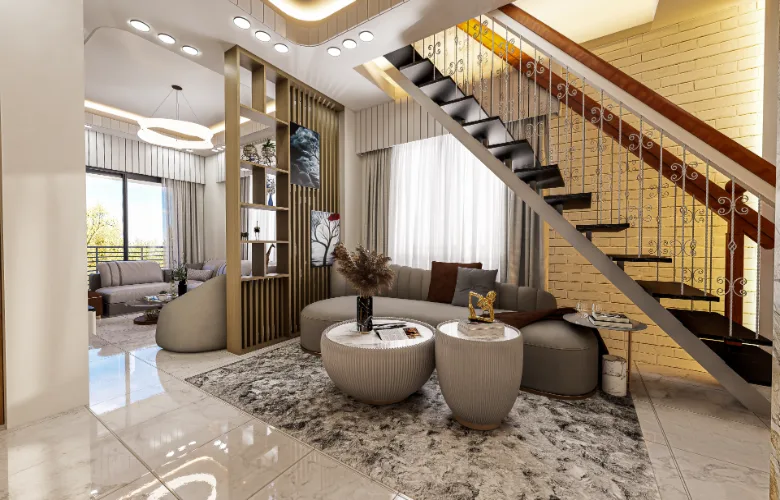
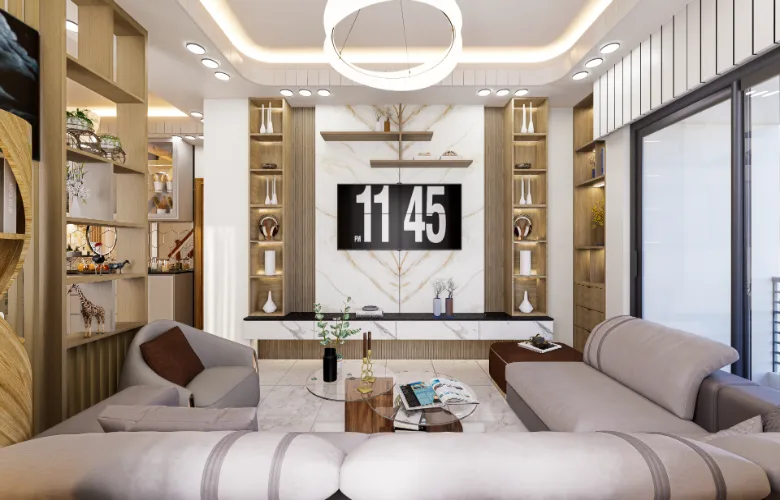
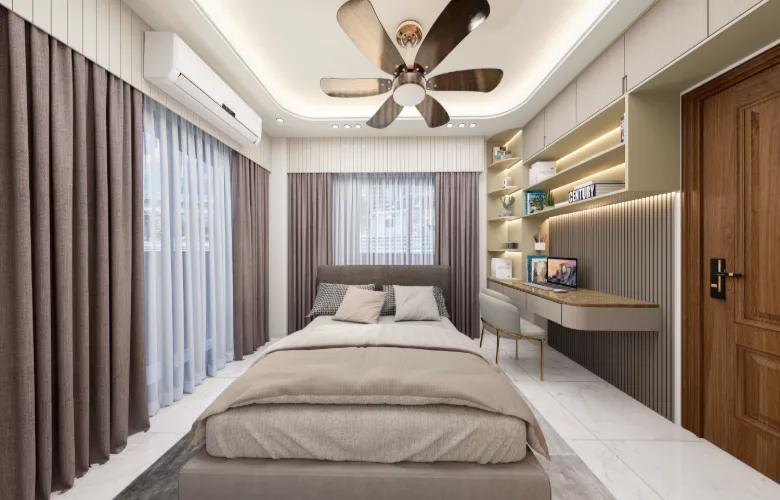
Therefore my design strategy was to remove or minimize vertical barriers (walls) so that the principal living spaces would be opened up to each other. To create a continuous line from floor-to-ceiling to eliminate division lines I relied heavily on horizontal surfaces such as floors, counters and walls. To help counteract the impact of low ceilings and to emphasize the verticality of some of the architectural elements (i.e. columns), I employed various forms of vertical surface treatments such as wood slats, built-in shelving and vertically-mounted lighting fixtures.
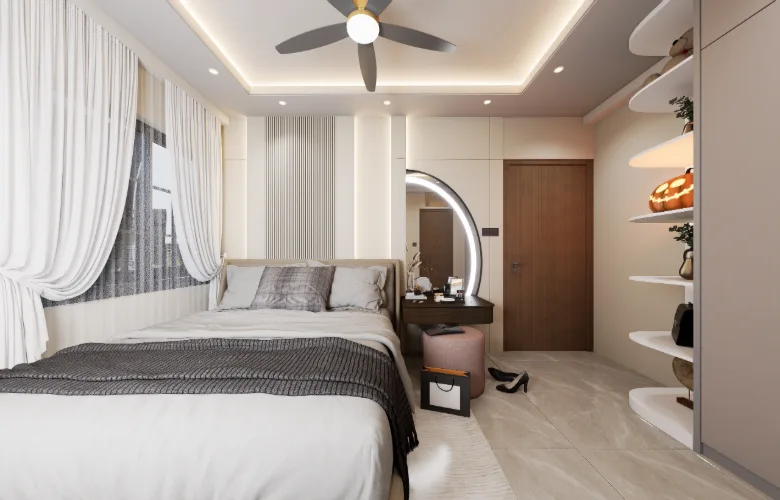
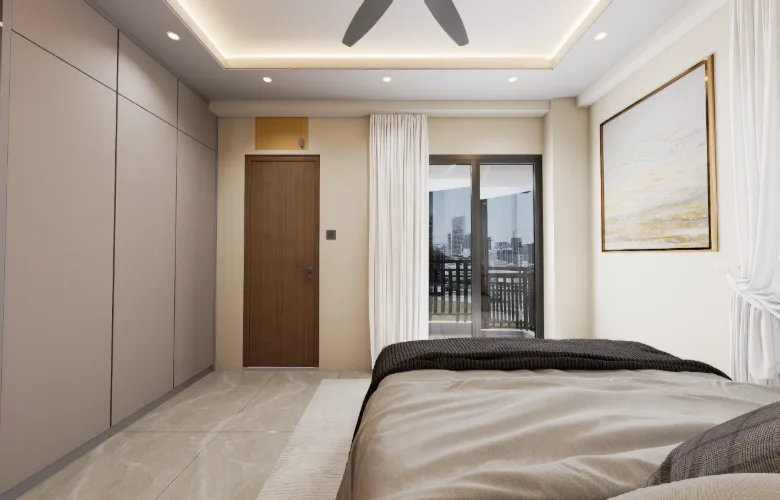
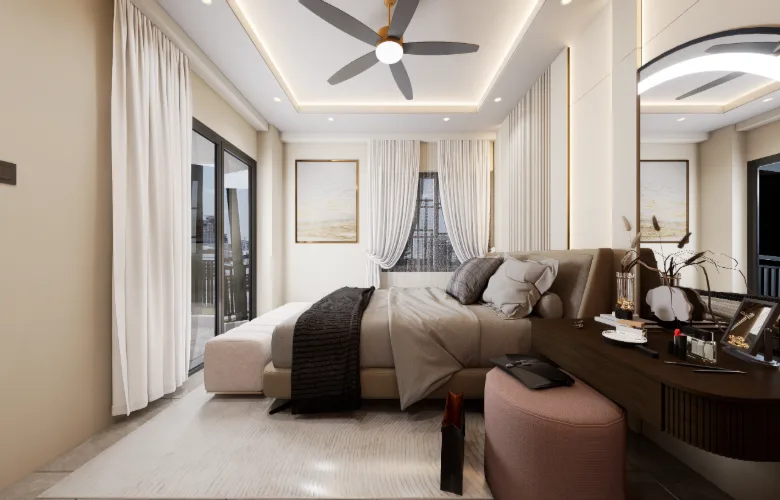
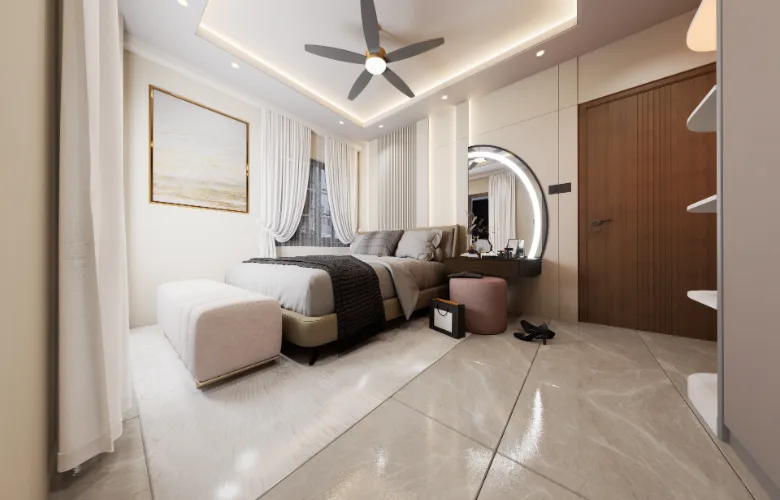
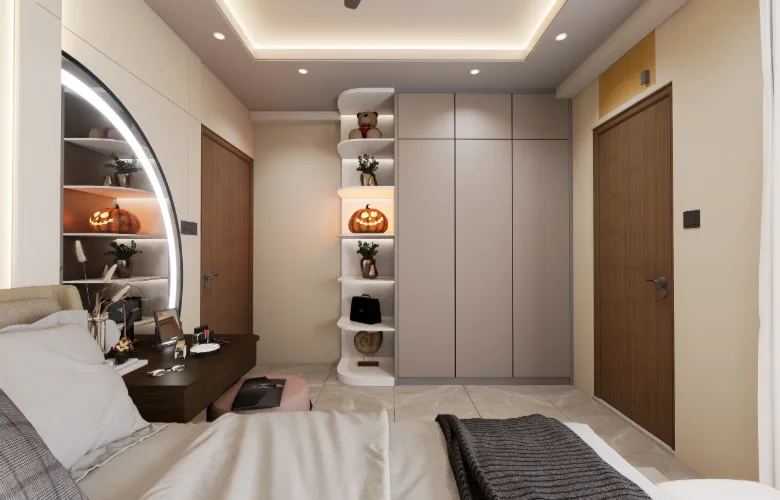
One of the most important aspects of the design was to locate the staircase within the living space instead of separating it by placing it outside. Not only did this save valuable space, but it allowed me to create a unique element out of something that normally serves only as a means of traveling from one level to another. It provided a visual break between two otherwise contiguous spaces. The bedrooms were developed as separate, more private areas of refuge. Here I emphasized storage capability and created a customized vanity arrangement.
Project insights:
Design details:
Space planning:
I created an open plan in common areas with private retreats in bedrooms. All circulation pathways remain unobstructed; multifunctional areas help to eliminate redundant spatial uses.
Materials & finishes:
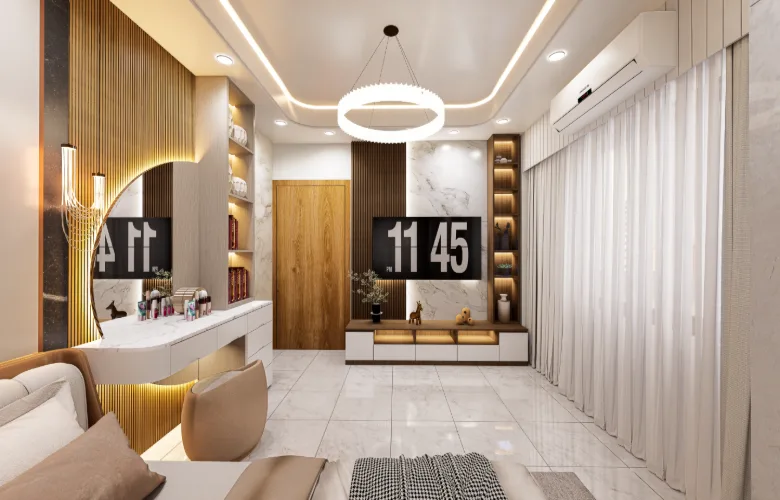
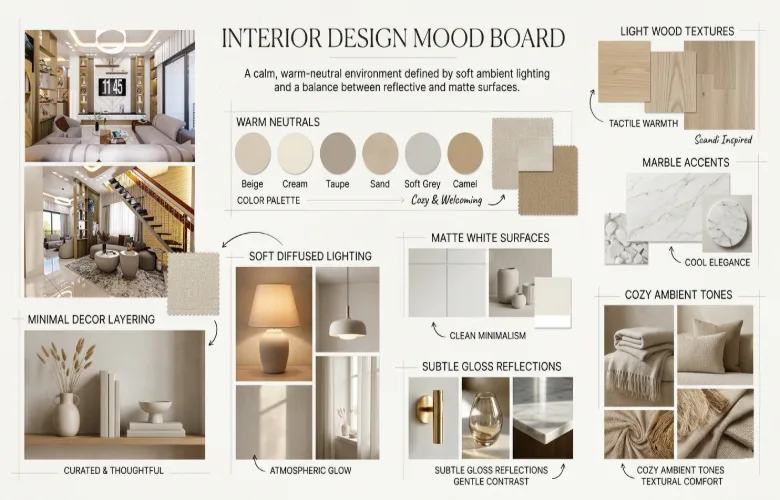
To create balance between the warmth of organic materials (wood veneer) and the coolness of slick surfaces (marble effect tile) I utilized a combination of these materials. Additionally, I chose durable products with low maintenance.
Lighting & atmosphere:
The layers of warm lighting create definition among zones while providing a cohesive whole experience. Cove lighting and backlit features create depth without adding clutter.
Color & texture:
With an extremely restricted palette consisting primarily of beige, white and wood tones, I maintained a serene quality throughout the space. Textures (matte finish, gloss finish, fabrics) added varying degrees of richness.
Furniture & joinery:
All custom cabinetry and floating shelves help to define the efficiency of the design. Vanity and tv cabinets are designed to accommodate maximum functionality within the limited space.
Visualization & Experience:
High-resolution 2D/3D still images were generated to illustrate how materials may interact, how light may behave, and how users will navigate the space.
A:Yes. To accomplish this, this project employed strategies like using open layouts, reflective finishes and vertical design elements to create a greater visual sense of size.
A: The artificial lighting has been layered to create a warm and even-lit space by incorporating cove lighting, spot lighting and backlighted features.
A: Yes. The layout supports daily activity for the family while maintaining safe and clear pathways through the space as well as long-lasting, durable materials used on the surfaces and floor.
A: Built-in wardrobe units, shelf niche areas and multi-functional wall mounted furniture pieces were all used to provide ample storage opportunities within the space constraints.
A:Using neutral color schemes creates a foundation for timelessness which makes it easy to adapt to potential changes in decor or personal lifestyles.
A: This method allowed the client to see how spaces will functionally relate to each other as well as visually and physically see what materials are being used prior to completion; thereby minimizing design revision requirements.
Kazi Family
Since 2010, a Dhaka-based interior and architectural firm with 549+ completed projects across Bangladesh. We specialize in residential, commercial, and hospitality spaces, delivering end-to-end design and execution solutions.
Protfolio
SERVICES
Residential Interior Design
Commercial & Office Interior Design
Architectural Design & Planning
3D Visualization & Rendering
CONTACT
Phone: +88 01841-384152
Email: info@kazifamilybd.com
Address: Sha-78, Satarkul Road, North Badda, Dhaka-1212